


How to Use Clove Oil for Toothache: A Step-by-Step Guide
Reviewed By Dr. Dennis Rollins, DDO |
July 2025 • 6 min Read
Reviewed By Dr. Dennis Rollins, DDO | July 2025 • 6 min Read
When a toothache hits, the pain can be distracting and exhausting. Clove oil is a well-known home remedy that can temporarily numb dental pain and help you get through the day or night until you can see a dentist.
This guide tells you how to use clove oil for toothache relief safely, how fast it works, and what it can and cannot do.
Why Clove Oil Helps Tooth Pain
Clove oil contains eugenol, a natural compound with mild anesthetic and antibacterial properties. Dentists have used eugenol for decades to calm irritated nerves.
Clove oil toothache relief works by:
- Temporarily numbing the nerve
- Reducing surface irritation
- Masking pain signals for a short period
It does not cure cavities, infections, or abscesses. It just buys you time.
What You Need Before You Start
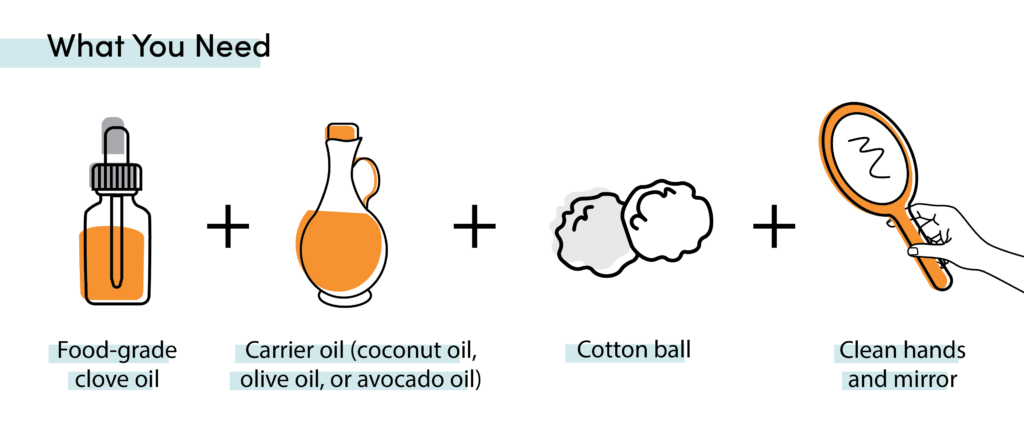
Using clove oil correctly matters. Never apply it straight from the bottle. You will need:
- Food-grade clove oil only
- A carrier oil such as fractionated coconut oil, olive oil, or avocado oil
- A cotton swab or small cotton ball
- Clean hands and a mirror
Avoid essential oils not labeled for food or oral use.
Step-by-Step: How to Use Clove Oil for Toothache
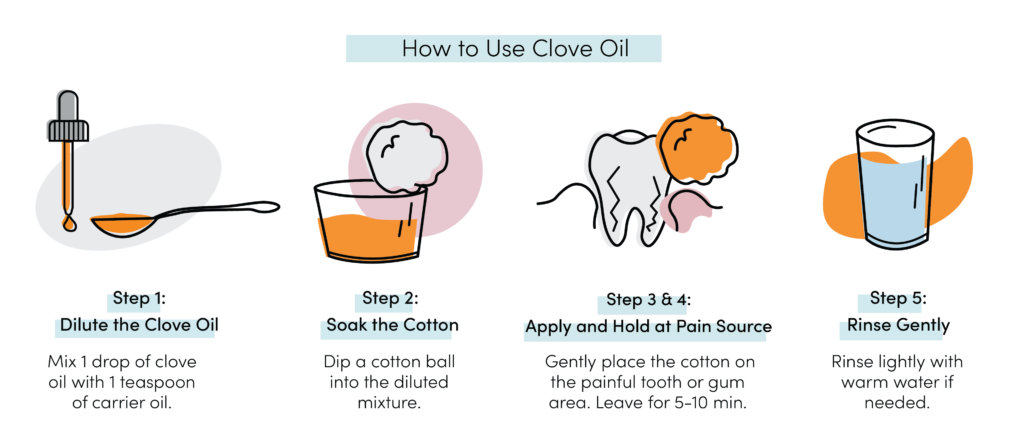
Step 1: Dilute the Clove Oil
Mix 1 drop of clove oil with 1 teaspoon of carrier oil. This prevents chemical burns and gum irritation.
Step 2: Soak the Cotton
Dip a cotton swab or ball into the diluted mixture. It should be damp, not dripping.
Step 3: Apply to the Pain Source
Gently place the cotton on the painful tooth or gum area. Do not rub aggressively.
Step 4: Hold and Remove
Leave in place for 5 to 10 minutes, then remove. Spit out excess oil. Do not swallow.
Step 5: Rinse Gently
Rinse lightly with warm water if needed. Relief usually begins within minutes and may last for one to two hours.
How Often Can You Use It?
You can use clove oil up to 3 times per day. But don’t overuse it, as you can experience:
- Burning or peeling gums
- Increased irritation
- Numbness spreading beyond the tooth
If pain keeps returning quickly, the underlying problem needs treatment.
Pro Tip: Best Carrier Oils for Oral Use
Your choice of carrier oil affects comfort and taste.
- Fractionated coconut oil: Mild flavor, smooth texture, very popular
- Olive oil: Easy to find, slightly stronger taste
- Avocado oil: Neutral flavor, gentle on gums
Avoid strongly flavored oils that may increase irritation.
Important Safety Warnings
Clove oil is powerful. Use it carefully.
- Never apply undiluted clove oil directly to gums
- Do not swallow clove oil
- Keep away from children
- Stop use if burning or redness occurs
Clove oil burns are painful and slow-healing.
When Clove Oil Is Not Enough
Clove oil masks pain. It does not stop infection or decay. Call a dentist promptly if you notice:
- Facial swelling
- Fever
- Throbbing pain that worsens
- A bad taste or pus
- Pain lasting more than one or two days
These signs mean the tooth needs professional care.
Transitioning From Relief to Real Treatment
The best time to schedule care is when the pain is temporarily under control.
Once clove oil takes the edge off:
- Call a dental office
- Explain where the pain is and how long it has lasted
- Ask for the soonest available evaluation
Clove oil gives you a window to act, not a solution to wait on.
Your Next Step
Using clove oil for toothaches can help you get through the moment, but it should never replace dental treatment. Tooth pain almost always signals a deeper issue that gets worse with time. Dentistry.com connects you with local dentists who can diagnose the cause of your pain and fix it properly.
Use temporary relief wisely. Then find a dentist near you and take care of the problem for good. Click here or call us at (888)597-3896 for help finding a dentist near you.
Need Help Finding a Dentist Today?
Related Information

Dental Payment Plans: How to Finance Emergency Work
Dental emergencies rarely come with warning. One cracked tooth, abscess, or failed crown can turn into a four-figure bill overnight. When you are in pain, the stress of figuring out how to pay can feel just as overwhelming as the dental problem itself.
Broken Permanent Retainer: Is It a Dental Emergency?
While a broken bonded retainer is rarely a medical emergency, you should make a dental appointment to prevent discomfort and tooth movement. Most dentists can usually solve the problem with a simple bonding fix.

Emergency Dentist Cost Without Insurance: Prices and Affordable Solutions
The first step in relieving acute tooth pain is an emergency dental exam. Without insurance, this typically costs $100-$300 dollars.
That appointment will allow for immediate pain management. If needed, you and the dental team can plan for additional treatment and discuss ways to break up the cost over time.