Gum Infection vs. Tooth Infection: Why the Difference Matters
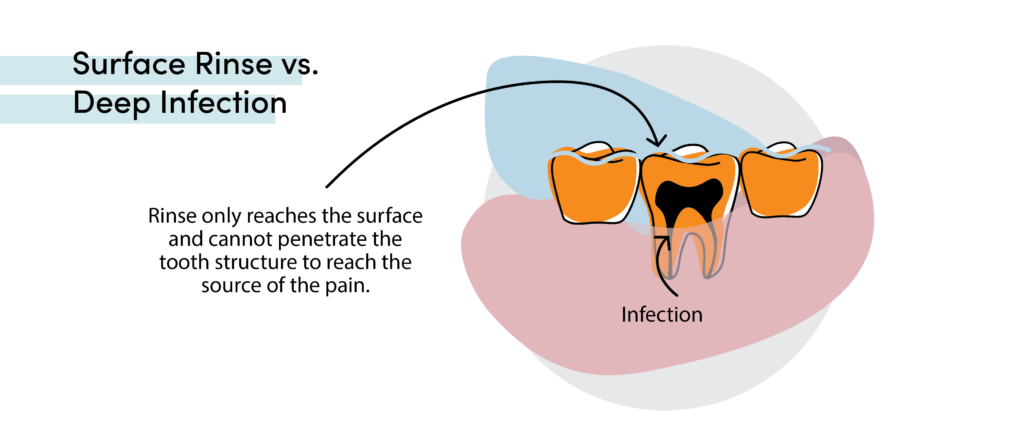
As we’ve said, hydrogen peroxide can reduce bacteria on the surface of your gums and teeth, but it cannot reach an infection deep inside a tooth.
- If your gums are mildly red or irritated, a properly diluted rinse can temporarily reduce some bacteria as the solution contacts the gum tissue.
- A tooth infection is different, because bacteria may be inside the pulp chamber and root canals or collected in an abscess near the root of the tooth. A mouth rinse cannot travel through healthy enamel and dentin to reach those areas.
That’s why an infected tooth can continue getting worse even when rinsing makes your mouth feel cleaner or temporarily reduces discomfort.
Red Flag vs. Green Light: When Is a Peroxide Rinse Enough?
A hydrogen peroxide rinse may be a good temporary measure while you’re waiting for a dental appointment, if you have mild gum irritation and no significant swelling, fever, or worsening tooth pain.
Skip the home remedy approach and contact a dentist promptly if you have:
- Severe or worsening tooth pain
- Swelling in your gums, face, or jaw
- Fever
- A bad or bitter taste in your mouth
- Visible pus or drainage
- Throbbing that continues when you aren’t eating or drinking
- Pain that spreads toward your ear, neck, or head
These symptoms can indicate that the problem has progressed beyond something a surface rinse can address. If swelling is spreading rapidly, you have difficulty swallowing or breathing, or you feel seriously ill, seek emergency medical care.
How Do You Know When a Rinse Has “Failed”?
Feeling less pain does not always mean you’re getting better; pain relief can make it tempting to keep rinsing and wait. However, the real test isn’t whether peroxide makes the tooth feel better; it’s whether the underlying symptoms are resolving.
An infection can sometimes become less painful even when the underlying problem remains. For example, if the nerve inside the tooth dies, the tooth may temporarily hurt less while infection continues around the root.
Myth vs. Reality: Common Hydrogen Peroxide Advice
Myth: Stronger hydrogen peroxide will kill the infection faster.
Reality: Higher concentrations increase the risk of chemical burns and tissue damage. Do not put concentrated or 35% “food-grade” hydrogen peroxide in your mouth.
Myth: Lots of bubbling means the peroxide is killing the abscess.
Reality: Bubbling is a surface chemical reaction; it does not mean peroxide has reached an infection inside the tooth.
Myth: You can pop a gum abscess and rinse it with peroxide.
Reality: Don’t attempt to pop, puncture, or drain an abscess yourself. Doing so does not eliminate the source of the infection and can cause additional tissue damage.
Myth: If the pain goes away after rinsing, you can wait to see what happens.
Reality: Temporary symptom relief doesn’t tell you whether an infection has resolved.
Why Treating the Source Matters
A hydrogen peroxide rinse can clean the surface, but only a dentist can determine what is happening underneath.
Depending on the cause, treatment for an infected tooth may involve draining an abscess, treating the inside of the tooth with a root canal, or removing a tooth that cannot be saved. The important part is identifying where the infection is coming from rather than repeatedly masking its symptoms.
Waiting can allow an infection to spread beyond the tooth into surrounding tissues. This can turn a dental problem into a much more serious health issue.
How Dentistry.com Helps When You Have a Tooth Infection
When a tooth hurts, it can be difficult to know whether you should wait for a regular appointment or need care right away. A home rinse may make the area feel better, but it can’t answer that question.
Dentistry.com can connect you with a local dentist who can evaluate the tooth, determine whether an infection or abscess is present, and explain the treatment needed to address the source.
Your Next Step
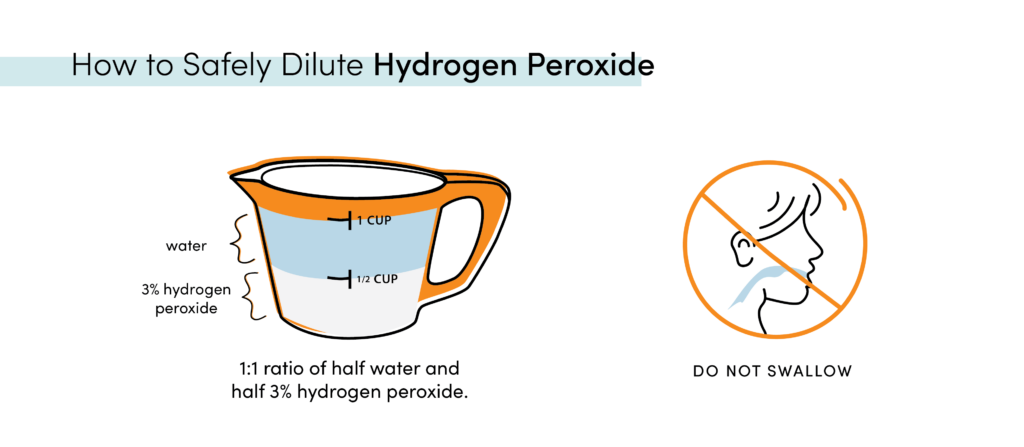
You can use diluted 3% hydrogen peroxide as a short-term mouth rinse to reduce bacteria around the gums and teeth. Mix it with an equal amount of water, swish gently, spit it out completely, and never swallow it. If you’re using hydrogen peroxide for an infected tooth, remember its biggest limitation: the rinse cannot reach an infection inside the tooth or at its root.
Use temporary relief as a bridge to getting the problem evaluated, not as a reason to put off treatment.
Get the dental care you need now. Click here or call (888) 597-3896 for help finding a dentist near you.
About Dr. Jody Bardash, DMD
About Dr. Jody Bardash, DMD
Dr. Jody Bardash is a lead clinician at Dental Professionals of Fair Lawn, a family and cosmetic dentistry practice in Fair Lawn, New Jersey. With more than 30 years of experience, he is committed to delivering compassionate, high-quality care in dentistry and facial esthetics.
A graduate of Isaac Brauer College at Yeshiva University, Dr. Bardash stays at the forefront of innovation through advanced clinical training and continuing education. He is a member of the AACD, ADA, AGD, American Academy of Facial Esthetics, and the American Society for Dental Aesthetics. He also serves as a Clinical Instructor at Hackensack University Medical Center and Englewood Hospital and has been recognized by the Consumers’ Research Council of America for 25 years as one of the top dentists and facial injectors in the United States.