imagen del cargador

Odontología

How Long After Tooth Extraction Can I Eat? Exact Timeline and Safe Foods

Doctor Profile Image

Revisado por Dr. Dennis Rollins, DDO |

Julio de 2025 - 6 min Leer

Reviewed By Dr. Dennis Rollins, DDO | Julio 2025 - 6 min Read

If you’ve just had a tooth pulled, eating may be the last thing on your mind, but nourishing your body is a key part of recovery. The right foods, at the right times, can help you heal faster and avoid painful complications like dry socket. The wrong ones can set you back days. 

This guide breaks down when and what to eat after a tooth extraction—from the first 24 hours to the one-week mark and beyond—plus which foods and habits to avoid until your mouth fully recovers. 

Why Eating Carefully After an Extraction Matters

Every tooth extraction leaves behind a small open socket in your gum and bone. Within hours, your body forms a protective blood clot in that space. This clot acts like a natural bandage, sealing the wound, preventing infection, and laying the foundation for new tissue to grow. 

Disturbing that clot through chewing, suction, or heat can expose the bone and nerves beneath it, leading to dry socket, a painful condition that delays healing for weeks. That’s why your post-extraction diet isn’t just about comfort; it’s about protecting the clot so your body can do its work. 

Your Eating Timeline After Tooth Extraction

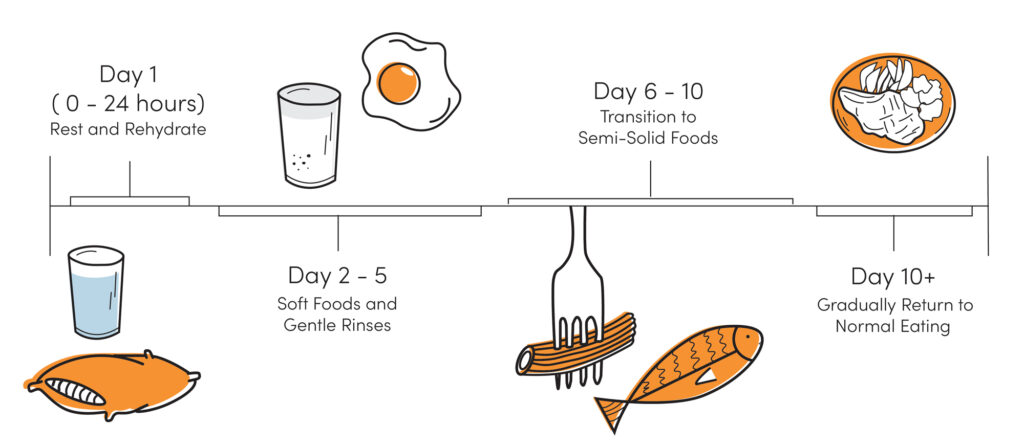
0–24 Hours: Rest and Rehydrate 

Goal: Protect the blood clot and avoid irritation.  

During the first day, your mouth is most vulnerable. Avoid all chewing near the extraction site and stick to cool, liquid foods. Gently press a cold compress to your cheek for 10–15 minutes every few hours to reduce swelling. 

Safe foods to eat: 

  • Cool or room-temperature smoothies (no straws) 
  • Plain yogurt or pudding 
  • Mashed bananas or applesauce 
  • Cool broths or blended soups (not hot) 
  • Water and electrolyte drinks


Avoid: 

  • Straws, spitting, or rinsing (can dislodge the clot) 
  • Hot or spicy foods (heat increases bleeding and swelling) 
  • Crunchy snacks, nuts, or seeds 
  • Alcohol and carbonated drinks 


Days 2–5: Soft Foods and Gentle Rinses 

Goal: Keep the area clean and support early healing. 

By the second day, the clot is stabilizing but still delicate. You can begin introducing soft, easy-to-swallow foods, but no chewing near the site yet. Add gentle oral care: after 24 hours, start rinsing your mouth lightly with a saltwater solution (½ teaspoon salt in 1 cup warm water) twice a day to keep the site clean. 

Safe foods to eat: 

  • Scrambled eggs 
  • Mashed potatoes or avocado 
  • Oatmeal, cream of wheat, or soft cereals 
  • Cottage cheese, hummus, or refried beans 
  • Smoothies or protein shakes (use a spoon, not a straw) 


Avoid: 

  • Chewing on the extraction side 
  • Crunchy or sticky foods (chips, bread crust, rice, peanut butter) 
  • Hot coffee, soup, or tea 
  • Vigorous mouth rinsing or spitting 


Days 6–10: Transition to Semi-Solid Foods 

Goal: Support tissue regeneration and resume gentle chewing. 

By this point, most simple extractions are well on their way to healing. If your pain and swelling are minimal, you can begin eating semi-solid foods. Surgical extractions—like wisdom teeth—may need a few extra days before this stage. If chewing causes discomfort or bleeding, return to softer foods for another day or two. Everyone heals at a different pace, so listen to your body. 

Safe foods to eat: 

  • Soft pasta, noodles, or rice 
  • Shredded chicken or fish 
  • Cooked vegetables 
  • Soft sandwiches or pancakes 
  • Protein-rich smoothies with Greek yogurt or nut butter (spoon only) 


Avoid: 

  • Hard, crunchy, or spicy foods 
  • Seeds or grains that can get trapped in the socket 
  • Very hot or very cold foods that trigger pain 


After 10 Days: Gradually Return to Normal Eating 

Goal: Maintain nutrition and monitor for lingering tenderness. 

Most patients can return to their regular diet after 7–10 days for simple extractions, or 10–14 days for surgical ones. However, it’s still wise to avoid extreme textures and temperatures until your gums feel fully normal. If you still experience sharp pain, swelling, or a foul odor, call your dentist, as these may be signs of infection or dry socket. 

You’re ready to resume normal eating if: 

  • The extraction site no longer feels tender 
  • There’s no visible swelling 
  • You can open your mouth and chew comfortably 
  • There’s no bleeding or bad taste in your mouth 

Timeline showing what to eat after tooth extraction, from liquids and soft foods to gradual return to normal eating

The Role of Extraction Type in Your Eating Timeline

Not all extractions heal at the same speed: 

  • Simple extractions (single-root teeth): Clot stabilizes quickly, often allowing solid foods by day 5–7. 
  • Surgical or wisdom tooth extractions: Involve deeper incisions and sutures, so solid food should wait until around day 10 or longer. 

If you received stitches, ask your dentist when they’ll dissolve or be removed, because this affects when you can safely resume chewing normally. 

Nutrition for Faster Healing

Eating the right nutrients supports your body’s natural repair process. Focus on foods that deliver protein, vitamin C, zinc, and calcium, which help regenerate gum tissue and bone. Avoid empty-calorie foods like chips, sweets, or soda. They offer no healing benefit and can irritate your mouth. 

Top nutrient-dense choices: 

  • Greek yogurt: High in protein and probiotics 
  • Soft scrambled eggs: Protein and vitamin D 
  • Mashed sweet potatoes: Vitamin A for tissue growth 
  • Smoothies with spinach and berries: Vitamin C and antioxidants 
  • Pureed lentil or chicken soup: Protein and iron 

Cuándo llamar al dentista

Mild soreness is normal for a few days. But call your dentist right away if you notice any of the following, as these can indicate dry socket or infection, both of which need prompt professional care: 

  • Severe or worsening pain after day 3 
  • Swelling that spreads to your cheek or jaw 
  • Persistent bleeding or pus at the site 
  • Bad taste or odor 
  • Fever over 100.4°F (38°C) 

Quick Checklist

After an extraction, timing is everything. 

  • First 24 hours: Liquids only 
  • Days 2–5: Soft foods and gentle rinses 
  • Days 6–10: Semi-solid foods as comfort allows 
  • After 10 days: Gradual return to normal diet 


The safest, fastest recovery comes from patience, good nutrition, and careful oral hygiene. If you’re ever unsure about what to eat or how your healing is progressing, call your dentist or find a trusted provider near you by entering your zip code aquí, or calling (888) 597-3896. 

¿Necesita ayuda para encontrar un dentista?