
imagen del cargador

Odontología

How to Rinse Your Mouth After Tooth Extraction: Safe, Easy Instructions for Faster Healing

Dr Jody Bardash DMD in Fair Lawn, NJ

Reviewed By Dr. Jody Bardash, DMD 


November 2025 • 6 min Read

Reviewed By Dr. Jody Bardash, DMD

November 2025 • 6 min Read

After a tooth extraction, keeping your mouth clean is essential, but rinsing too soon or too vigorously can dislodge the blood clot, leading to a painful condition called dry socket. This guide gives you precise timing, step-by-step technique, and clear dos and don’ts so you can clean your mouth confidently without disrupting healing.

Why Rinsing Matters, And Why Timing Is Everything

Your body forms a blood clot in the extraction site within the first day. This clot protects the bone and nerves underneath. Rinsing too early, or too forcefully, can dislodge it. The good news: with the right timeline and technique, rinsing supports healing instead of interrupting it.

Common concerns include:

  • When can I safely rinse?
  • How much salt should I use?
  • How do I rinse without “swishing”?
  • How do I avoid dry socket?

When You Can Start Rinsing (Clear Timeline)

First 24 Hours: No Rinsing

Avoid all rinsing, spitting, mouthwash, or vigorous movement of water in your mouth. The clot needs time to stabilize.

Day 2–7: Saltwater Rinses Only

You can begin gentle saltwater rinsing, using the Gravity Rinse method (explained below).

After Day 7: Resume Normal Rinsing

If the site is healing well, you can gradually return to normal dental hygiene. Avoid alcohol-based mouthwashes until your dentist says it’s okay to use them.

How to Make a Safe Saltwater Rinse

A saltwater solution helps keep the area clean without irritating the wound.

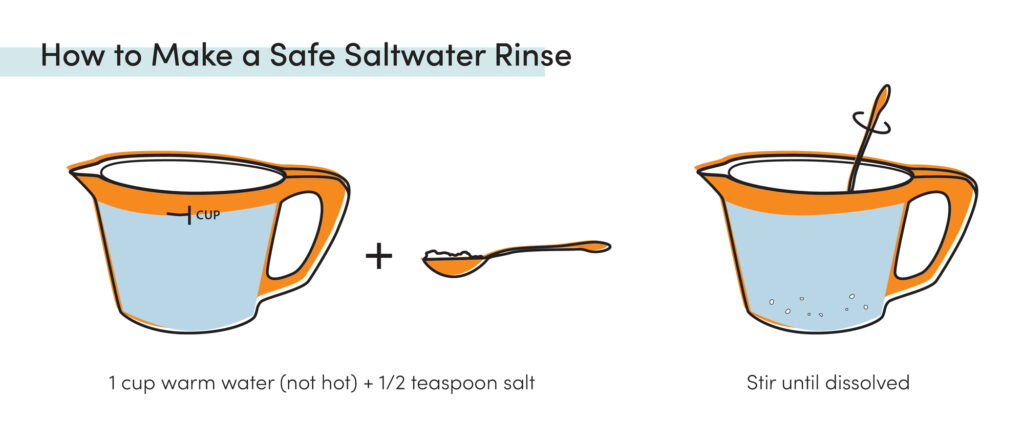
Saltwater Recipe

  • 1 cup warm (not hot) water
  • ½ teaspoon salt


Stir until dissolved. Be sure to use warm, not hot, water. Warmth increases comfort and blood flow, while very hot water can dissolve the clot or burn the tissue.

Optional addition: ¼ teaspoon baking soda to help neutralize acidity.

How to make a safe saltwater rinse with 1 cup warm water and 1/2 teaspoon salt for dental healing

The Gravity Rinse: How to Rinse Without Causing Damage

Most instructions say, “rinse gently,” but don’t explain how. Here is the exact technique to protect your extraction site: clean the mouth without negative pressure or muscle force, both of which can dislodge the clot.

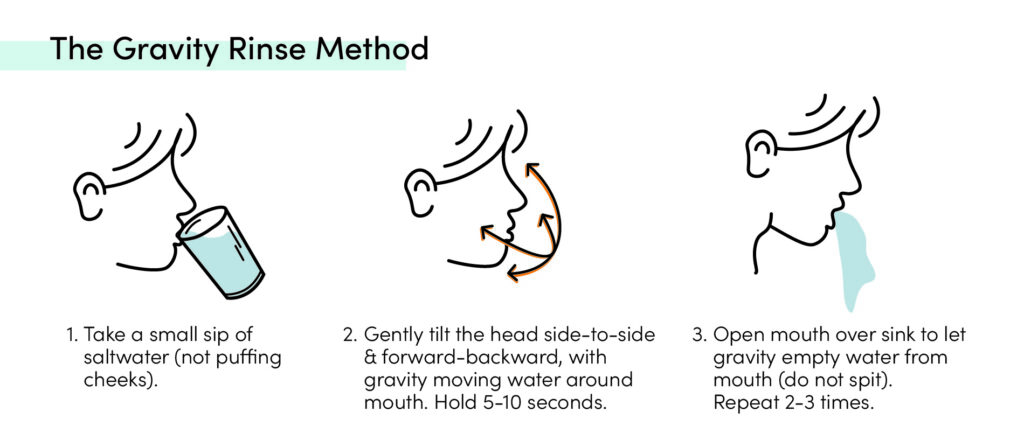
The Gravity Rinse Method
  1. Take a small sip of saltwater.
  2. Do not swish. Keep your cheek muscles relaxed.
  3. Tilt your head side to side and forward to backward so gravity moves the water around your mouth.
  4. Hold for 5–10 seconds.
  5. Let the water fall out into the sink. Do not spit. Lean forward, open your mouth, and let gravity empty it for you.
  6. Repeat 2–3 times.
Gravity rinse method for dental aftercare showing gentle saltwater rinse technique without spitting

What to Expect When Rinsing

During the first few days, it’s normal to see:

  • Light pink water
  • Minor tenderness around the socket
  • A “warm” feeling where the clot sits

Call your dentist if you notice:

  • Bright red bleeding
  • Foul odor that worsens after rinsing
  • Increasing pain after Day 3
  • Visible empty socket (sign of dry socket)

Your Day-by-Day Rinse Schedule

  • Day 1: No rinsing. Leave the clot untouched.
  • Days 2–3: Gravity Rinse with saltwater 2–3 times per day.
  • Days 4–7: Continue Gravity Rinse after meals and before bed. If your dentist prescribes an irrigation syringe, follow your dentist’s instructions for gently cleaning the site (usually after Day 5).
  • After Day 7: Gradually return to normal rinsing. Avoid commercial mouthwashes containing alcohol until fully healed.

Set Yourself Up for Success: The “Kitchen Counter” Healing Station

Make the next seven days easier by preparing a simple aftercare setup, reducing strain, keeping you consistent, and preventing rushing (which is why most dry-socket mistakes happen).

Your Healing Station Should Include:

  • A bottle of pre-mixed saltwater (so you don’t have to mix a fresh cup while in pain)
  • A small cup to portion out rinse amounts
  • A mirror for checking swelling, bleeding, or food debris
  • Gauze (if your dentist recommends it)
  • A clean towel to keep things tidy

Other Dos and Don’ts You Should Know

Do:
  • Use warm saltwater only
  • Follow the Gravity Rinse steps carefully
  • Rest and stay hydrated
  • Brush your other teeth gently
Don’t:
  • Spit
  • Swish forcefully
  • Drink through a straw
  • Smoke or vape (high dry-socket risk)
  • Use alcohol-based mouthwashes

Not sure if your tooth extraction site is getting better or worse? A dentist can tell you in minutes.

Si necesita ayuda para encontrar un dentista en su zona, haga clic en aquí o llámenos al (888) 597-3896

Your Recovery Timeline Checklist

  • Wait 24 hours before any rinsing
  • Start Gravity Rinse on Day 2, using the saltwater recipe (½ tsp salt per cup of warm water)
  • Avoid spitting, swishing, and straws
  • Watch for signs of dry socket
  • Call a dentist if the pain worsens or the socket looks empty

Need Help After Your Extraction?

If something doesn’t feel right or if you’re unsure whether your healing is normal, reach out to a dentist promptly. Enter your ZIP code aquí or call (888) 597-3896 to speak with a dental professional who can answer urgent aftercare questions.

¿Necesita ayuda para encontrar un dentista?