Dental Repair Cost: What to Expect and How to Save Money on Treatment
When something breaks in your mouth—a chipped tooth, a missing filling, or a cracked crown—the first thought is often, “How much is this going to cost me?” This guide breaks down actual average prices for common dental repairs, explains what affects those costs, and shows you practical ways to make treatment affordable, so you can fix the problem before it becomes more painful or expensive.
When Dental Repair May Be Needed
Small Damage, Bigger Consequences
Even minor chips or lost fillings can quickly become costly issues.
Fractured Tooth
Exposed inner tissue can cause sharp sensitivity and ongoing pain.
Severe Tooth Decay
Decay reaching the nerve often requires a root canal or extraction.
Lost Crown or Filling
An unprotected tooth is prone to damage, sensitivity, and infection.
Dental Infection
Swelling, tenderness, or pus can signal a serious infection.
Delaying Treatment
Putting off care can quickly increase severity and repair costs.
What to Expect During a Dental Visit for Tooth Repair
Evaluation
Quick X-rays and an exam determine whether the issue is surface-level or internal and guide the treatment plan.
Treatment
Local anesthesia ensures comfort while the damaged or decayed structure is removed and restored with a filling, crown, veneer, or implant.
Follow-Up
Adjustments ensure comfort, stability, and long-term results, with most patients experiencing only mild soreness after one or two visits.
Average Dental Repair Costs in the U.S.
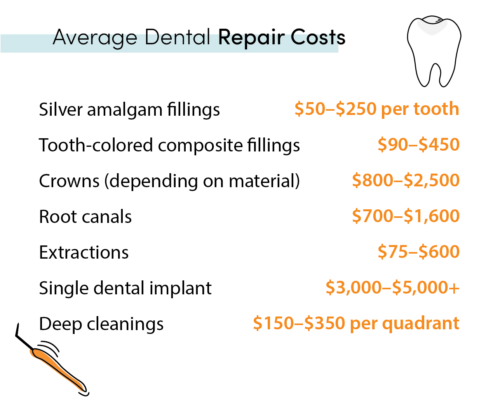
Dental repair costs in the U.S. vary by location, materials, and case complexity, but general ranges can help set expectations without insurance coverage. Silver amalgam fillings are the most affordable at about $50–$250 per tooth, while tooth-colored composite fillings range from $90–$450. Crowns typically cost $800–$2,500, depending on the material. Root canals range from $700 to $1,600, depending on tooth location. Extractions cost $75–$600, depending on complexity. A single dental implant can run $3,000–$5,000 or more. Deep cleanings, often partially covered by insurance, typically cost $150–$350 per quadrant.

Understanding What Drives Dental Repair Costs
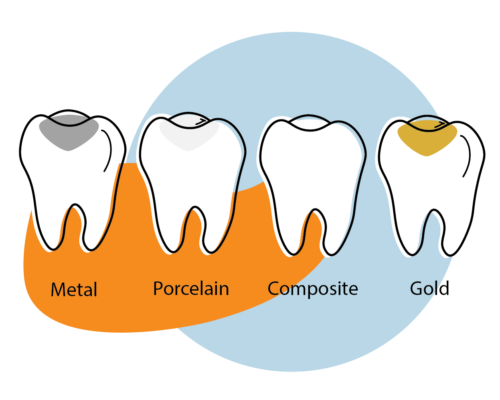
Several factors influence the cost of dental repairs, and understanding them can help you make informed decisions. Material choice plays a major role, as metal, composite, porcelain, and gold restorations vary in price, durability, and appearance. The complexity of the procedure also matters; larger cavities, multi-root teeth, or cracked crowns require more time and expertise. Insurance typically covers restorative work needed for oral health, but not cosmetic treatments like veneers. Costs can also vary by location, with urban practices often charging more. Additionally, advanced technology and high-end labs can improve outcomes but may increase overall fees.
The 5-Step Affordability Action Plan
Even without strong insurance, there are practical ways to manage dental costs and still get the care you need. Start by calling your dentist to request same-day quotes and flexible payment options, and always ask for a written estimate with a full breakdown of procedures, materials, and expected insurance coverage. Clarify what’s considered restorative versus cosmetic, as this affects coverage. Many offices offer payment plans or financing through providers like CareCredit. You can also explore dental discount programs or treatment at accredited dental schools for reduced fees. Finally, compare quotes and confirm coverage before committing to any procedure.
For help finding a dentist in your area, click here or call us at (888) 597-3896.
How to Choose the Right Repair for Your Tooth
Choosing the right dental repair depends on the extent of damage and your long-term goals. For a small chip or crack, bonding is quicker and more affordable, while veneers offer a more durable, aesthetic option. Moderate damage or decay may require a composite filling or a crown if much of the tooth is compromised. Severe damage or infection is often best treated with a root canal and crown to preserve the natural tooth. If a tooth is missing, bridges are a lower upfront option, while implants offer greater longevity despite a higher initial cost.
Insurance, Financing, and Coverage Tips
Dental insurance can help offset costs, but it’s important to understand how coverage works. Most plans cover 50–80% of restorative procedures after you meet your deductible, while cosmetic treatments like veneers or whitening are typically not covered. Many policies also include annual maximums, often between $1,000 and $2,000, after which you’ll pay out of pocket. Be aware of “alternate benefit” clauses, where insurance may reimburse based on a lower-cost material. Always confirm your dentist is in-network, as this can reduce your total bill by 20–40%.
Ask A Dentist: Dr. Dennis Rollins:
When is a tooth extraction an emergency and when it can wait?
Class aptent taciti sociosqu ad litora torquent per conubia nostra, per inceptos himenaeos. In hac habitasse platea dictumst. Aenean dignissim, nibh sed iaculis hendrerit, velit risus rhoncus massa, in dictum nulla lectus ac eros. Phasellus laoreet mauris turpis, eget varius nisl tempor nec. Fusce eget ante mattis diam blandit cursus. Vivamus dignissim est sit amet tellus venenatis varius.
Nunc blandit libero sit amet odio ornare, eget suscipit lacus blandit. Quisque bibendum laoreet convallis. Vestibulum vestibulum posuere risus at scelerisque. Vestibulum ante ipsum primis in faucibus orci luctus et ultrices posuere cubilia curae; Mauris sed sapien bibendum, maximus eros ut, volutpat erat.
Find Affordable Dental Repair Near You
Relief and savings start here. You don’t have to choose between your smile and your budget. Understanding your options and planning for costs now can save you thousands later.
Get relief from wisdom tooth pain. Call now for a same-day appointment with a dentist near you.
Frequently Asked Questions
How much does a dental filling cost without insurance?
$50–$250 for silver amalgam; $90–$450 for tooth-colored composite. Prices vary by size and tooth location.
How much is a dental crown?
$800–$2,500 depending on material and complexity. Porcelain and ceramic are more expensive than metal.
Can fixing a chipped tooth be covered by insurance?
If the chip causes pain or affects function, then yes, it can be billed as restorative. Purely cosmetic repairs may not be covered.
What if I don’t have dental insurance?
Ask about in-house financing, CareCredit, or discount plans. Many dentists offer flexible options to make essential repairs affordable.
How much does a root canal and crown together cost?
Typically $1,500–$3,500 per tooth, depending on location and insurance coverage.
Can I get lower-cost care at a dental school?
Yes. Licensed instructors supervise student dentists, offering safe care at 40–60% lower cost.
Why do prices vary so much between dentists?
Overhead, lab costs, materials, and experience level all affect pricing. City clinics tend to charge more than suburban or rural offices.
Is delaying a repair worth it?
No. A small cavity or chip can quickly escalate to infection, greatly increasing your final bill.