Emergency or Not? A Simple Triage Guide
Use this quick check to decide your next step.
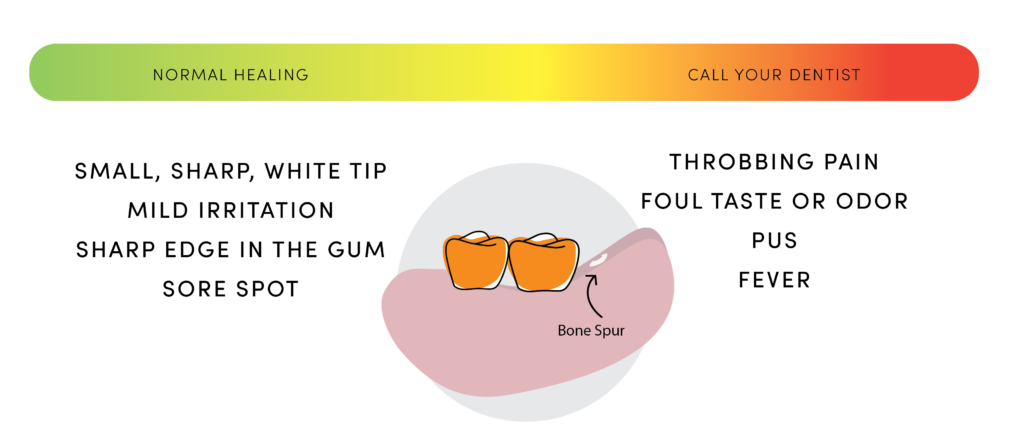
Likely Not an Emergency
- Discomfort is mild, around 1 to 3 out of 10
- No swelling or fever
- Pain improves day by day
- The area looks clean
Call a dentist and book a routine follow-up.
Needs Prompt Dental Attention
- Pain is moderate, around 4 to 6 out of 10
- The sharp edge keeps cutting your tongue or cheek
- Gum tissue is irritated or inflamed
- Healing feels stalled
Call a dentist for an appointment right away.
Seek Urgent Care
- Pain is severe, 7 or higher
- Swelling is spreading
- Fever or bad taste is present
- Difficulty opening your mouth
Contact a dentist immediately or seek emergency care if symptoms escalate.
Do Not Try to Remove a Bone Spur Yourself
A dentist can remove or smooth the bone safely in minutes if needed, but it can be tempting to grab tweezers and pull the fragment out yourself. Do not do this. Trying to remove a bone spur at home can:
- Introduce bacteria into the wound
- Delay healing
- Cause bleeding or infection
- Break the fragment, making it worse
How Dentists Treat Bone Spurs
Treatment is usually simple and fast. In rare cases, additional treatment is needed, especially if infection is present.
Options include:
- Gently removing the loose fragment
- Smoothing the bone surface
- Prescribing rinses if the tissue is irritated
Dentures Can Make It Worse
If you wear dentures or partials, a bone spur can become more painful. Pressure from a poorly fitting appliance can rub against the sharp edge and inflame the gum.
If discomfort increases when wearing dentures, remove them and call a dentist.
What to Say When You Call the Dental Office
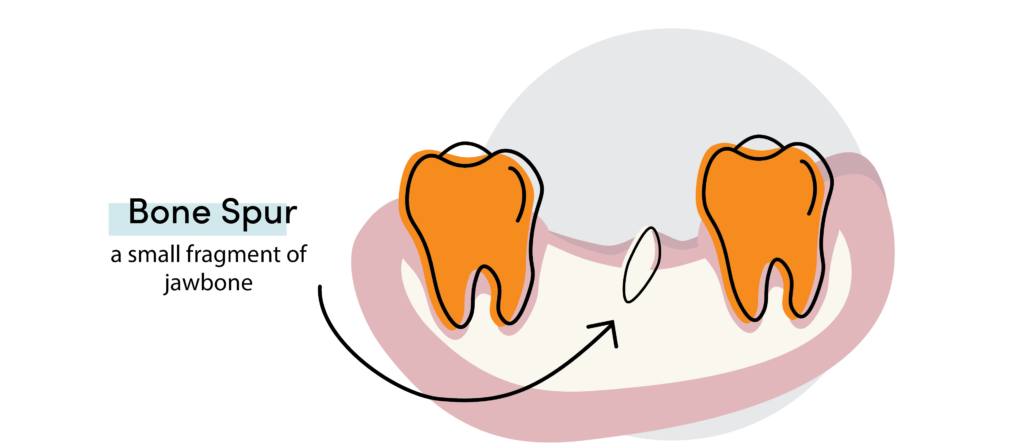
Clear language helps you get the right appointment. Tell the office that you may have a bone spicule and need an evaluation.
Say:
“I recently had a tooth extraction and now feel a sharp bone fragment coming through my gum. It’s painful and catching on my tongue.”
Why This Cannot Be Diagnosed Online
Only an in-person dental exam can confirm what is happening and treat it properly. Photos and descriptions cannot reliably tell the difference between:
- A bone spur
- A retained tooth fragment
- A healing issue like dry socket
Your Next Step
Most bone spurs after extraction aren’t emergencies, but you shouldn’t ignore them if they cause pain or interfere with healing. A quick dental visit can bring immediate relief and peace of mind.
Dentistry.com helps you find local dentists who can evaluate post-extraction issues and treat them quickly.
Find a dentist near you and get your healing back on track. Click here or call (888) 597-3896 for help finding a dentist near you.
About Dr. Jody Bardash, DMD
About Dr. Jody Bardash, DMD
Dr. Jody Bardash is a lead clinician at Dental Professionals of Fair Lawn, a family and cosmetic dentistry practice in Fair Lawn, New Jersey. With more than 30 years of experience, he is committed to delivering compassionate, high-quality care in dentistry and facial esthetics.
A graduate of Isaac Brauer College at Yeshiva University, Dr. Bardash stays at the forefront of innovation through advanced clinical training and continuing education. He is a member of the AACD, ADA, AGD, American Academy of Facial Esthetics, and the American Society for Dental Aesthetics. He also serves as a Clinical Instructor at Hackensack University Medical Center and Englewood Hospital and has been recognized by the Consumers’ Research Council of America for 25 years as one of the top dentists and facial injectors in the United States.