If you’re preparing for a dental procedure and are feeling unsure about how long sedation will affect you, you’re not alone. Whether you’re planning time off work, arranging a ride, or simply wondering when you’ll feel “normal” again, this guide provides clear, safety-focused timelines for each type of dental sedation, along with what to expect before, during, and after your appointment.
Why Knowing the Duration of Your Sedation Matters
Sedation helps you stay relaxed and comfortable during dental work, but recovery time varies widely. You may feel awake long before your reflexes and judgment fully return—this is the difference between “medical recovery” and “functional recovery.” Medical recovery is when the sedative has largely left your bloodstream, but functional recovery is when your judgment, coordination, and reflexes return to safe levels.
Many people worry about:
- How long they’ll feel groggy
- When they can drive
- When they can return to work or school
- Whether they’ll remember the appointment
- What they should prepare at home ahead of time
This guide breaks down everything you need to plan your recovery with confidence.
Below are the four most common types of dental sedation and estimates of what you can expect during recovery.
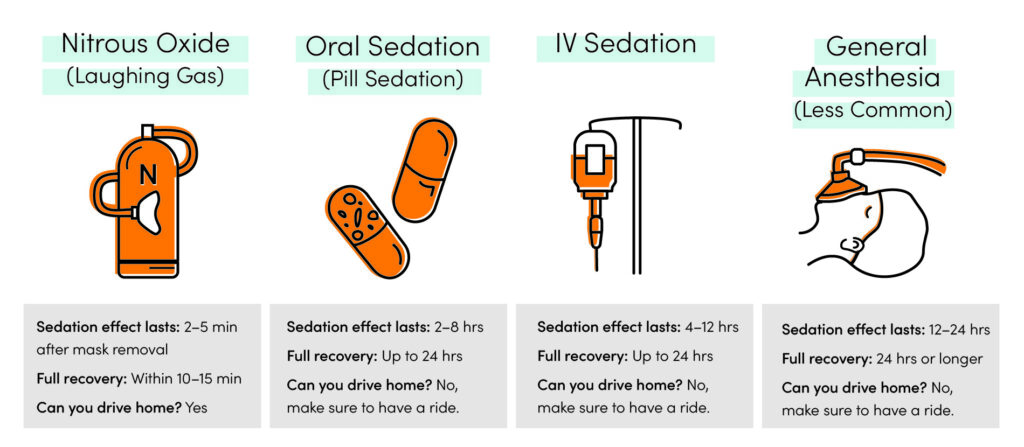
1. Nitrous Oxide (Laughing Gas)
Sedation effect lasts: 2–5 minutes after mask removal
Full recovery: Within 10–15 minutes
Can you drive home? Yes
Nitrous oxide is the only sedation option that wears off quickly enough for most patients to resume normal activities right away. Once the oxygen flush is complete, alertness returns rapidly.
What to expect:
You may feel light, warm, or tingly during the procedure. These sensations fade quickly once the gas stops flowing.
2. Oral Conscious Sedation (Pill Sedation)
Sedation effect lasts: 2–8 hours
Full recovery: Up to 24 hours
Can you drive home? No
Oral sedation uses a prescription pill to reduce anxiety and induce drowsiness. Many patients fall asleep lightly but can still respond to the dentist’s instructions.
What to expect:
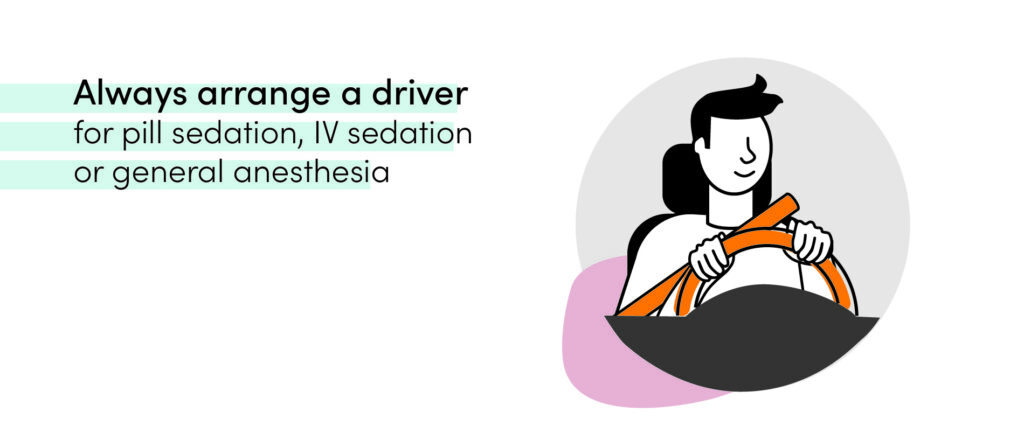
You’ll feel unsteady and slow to react afterward. You will need a driver and should avoid work, school, or any activity requiring quick decisions for the rest of the day.
3. IV Sedation
Sedation effect lasts: 4–12 hours
Full recovery: Up to 24 hours
Can you drive home? No
IV sedation creates deeper relaxation and can cause temporary amnesia. Even if you feel clear-headed sooner than expected, your reaction time and judgment remain affected much longer.
What to expect:
You may not remember parts of the appointment. Plan a quiet rest of your day and have someone stay with you for several hours.
4. General Anesthesia (Less Common in Dentistry)
Sedation effect lasts: 12–24 hours
Full recovery: 24 hours or longer
Can you drive home? No
Used mostly for complex oral surgeries, general anesthesia fully renders you unconscious.
What to expect:
You will be monitored closely until you are fully awake, but grogginess and delayed reflexes persist well into the next day.
Not sure which type of sedation is right for you? A dentist can help you navigate the options.
Si necesita ayuda para encontrar un dentista en su zona, haga clic en aquí o llámenos al (888) 597-3896.