¿Cuánto tiempo dura la sedación dental? Respuestas claras y qué esperar
Reviewed By Dr. Ehab Shahid, DMD, MAGD
Noviembre de 2025 • 6 min de lectura
Revisado por el Dr. Ehab Shahid, DMD, MAGD
Noviembre de 2025 • 6 min de lectura
Si estás preparando un procedimiento dental y tienes dudas sobre cómo te afectará la sedación, no estás solo. Ya sea que estés planeando tomar un día libre, organizar un transporte o simplemente preguntarte cuándo volverás a sentirte “normal”, esta guía proporciona plazos claros y enfocados en la seguridad para cada tipo de sedación dental, junto con lo que esperar antes, durante y después de la consulta.
Why Knowing the Duration of Your Sedation Matters
Sedation helps you stay relaxed and comfortable during dental work, but recovery time varies widely. You may feel awake long before your reflexes and judgment fully return—this is the difference between “medical recovery” and “functional recovery.” Medical recovery is when the sedative has largely left your bloodstream, but functional recovery is when your judgment, coordination, and reflexes return to safe levels.
Many people worry about:
- How long they’ll feel groggy
- When they can drive
- When they can return to work or school
- Whether they’ll remember the appointment
- What they should prepare at home ahead of time
This guide breaks down everything you need to plan your recovery with confidence.
How Long Each Type of Dental Sedation Lasts
Below are the four most common types of dental sedation and estimates of what you can expect during recovery.
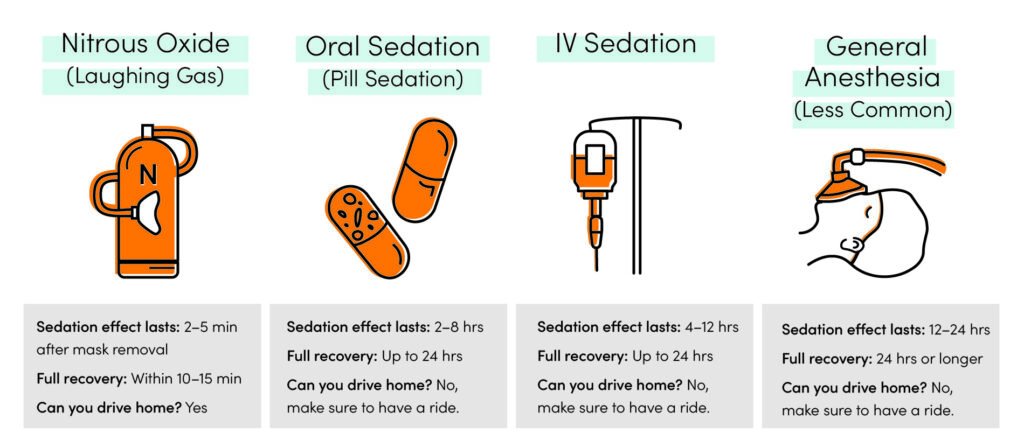
1. Nitrous Oxide (Laughing Gas)
Sedation effect lasts: 2–5 minutes after mask removal
Full recovery: Within 10–15 minutes
Can you drive home? Yes
Nitrous oxide is the only sedation option that wears off quickly enough for most patients to resume normal activities right away. Once the oxygen flush is complete, alertness returns rapidly.
What to expect:
You may feel light, warm, or tingly during the procedure. These sensations fade quickly once the gas stops flowing.
2. Oral Conscious Sedation (Pill Sedation)
Sedation effect lasts: 2–8 hours
Full recovery: Up to 24 hours
Can you drive home? No
Oral sedation uses a prescription pill to reduce anxiety and induce drowsiness. Many patients fall asleep lightly but can still respond to the dentist’s instructions.
What to expect:
You’ll feel unsteady and slow to react afterward. You will need a driver and should avoid work, school, or any activity requiring quick decisions for the rest of the day.
3. IV Sedation
Sedation effect lasts: 4–12 hours
Full recovery: Up to 24 hours
Can you drive home? No
IV sedation creates deeper relaxation and can cause temporary amnesia. Even if you feel clear-headed sooner than expected, your reaction time and judgment remain affected much longer.
What to expect:
You may not remember parts of the appointment. Plan a quiet rest of your day and have someone stay with you for several hours.
4. General Anesthesia (Less Common in Dentistry)
Sedation effect lasts: 12–24 hours
Full recovery: 24 hours or longer
Can you drive home? No
Used mostly for complex oral surgeries, general anesthesia fully renders you unconscious.
What to expect:
You will be monitored closely until you are fully awake, but grogginess and delayed reflexes persist well into the next day.
Not sure which type of sedation is right for you? A dentist can help you navigate the options.
Si necesita ayuda para encontrar un dentista en su zona, haga clic en aquí o llámenos al (888) 597-3896.

The 24-Hour Rule: What You Should Not Do
Sedation can create an amnesic, intoxication-like effect, and patients often underestimate how impaired they are. Even if you feel fine, sedation can impair judgment in ways that aren’t obvious. For 24 hours after oral or IV sedation, avoid:
- Driving
- Operating machinery
- Returning to work that requires focus or coordination
- Making financial decisions
- Signing legal documents
- Online shopping or impulse purchases
- Drinking alcohol
Factors That Change Recovery Time
Every patient is different; your dentist will adjust dosing based on these factors. Your recovery may be shorter or longer depending on:
- Age
- Weight
- Liver function
- Metabolism
- Type and duration of the procedure
- Medications you take
- Anxiety levels or sedative tolerance
What a Normal Recovery Feels Like
Call your dentist if symptoms worsen after several hours or if you experience trouble breathing, persistent vomiting, or fever. Otherwise, recovery symptoms are normal and improve gradually. During the first few hours, you may notice:
- Grogginess
- Slowed reflexes
- Mild nausea
- Dry mouth
- Forgetfulness
- A sensation of being off balance
What to Prepare at Home: A Simple Recovery Setup
Make your recovery smoother by arranging a few items ahead of time to reduce stress when you return home drowsy or unsteady:
- Soft foods (yogurt, applesauce, soup, mashed potatoes)
- Plenty of water or electrolyte drinks
- Extra pillows for upright resting
- Comfortable blankets
- A place to sit or lie down without risk of falling
- Entertainment (audiobooks, movies, music)
Questions to Ask When You Call to Book an Appointment
When scheduling your procedure, ask the following questions to help you get the right care and ensure your recovery goes smoothly:
- What types of sedation do you offer (nitrous, oral, IV)?
- Do I need a driver?
- How long should someone stay with me afterward?
- How long before the appointment should I stop eating or drinking?
- Are there extra sedation fees?
- Is sedation covered by my insurance, or is it available with cash discounts?
- How long should I take off work or school?
Your Quick Sedation Checklist
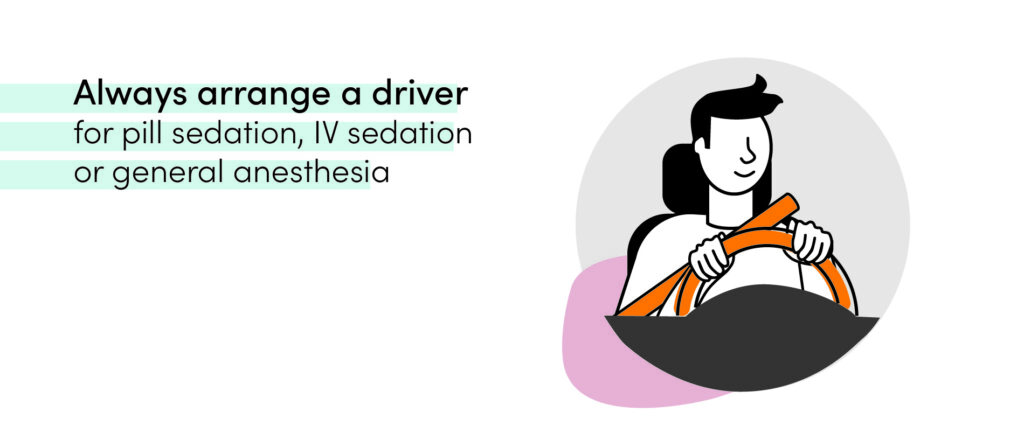
- Always arrange a driver for pill or IV sedation
- Prepare your home in advance
- Avoid driving and making important decisions for 24 hours
- Call a dentist if symptoms worsen
Sobre el Dr. Ehab Shahid, DMD, MAGD
El Dr. Ehab Shahid es el médico principal Bergenfield Dental Associates, En este centro, donde se dedica a poner a los pacientes primero, cree que cada cita debe dejar a los pacientes con la sensación de que se les escucha, de que se sienten cómodos y seguros en sus cuidados, con un enfoque en mantener unos sonrisas saludables durante toda la vida.
El Dr. Shahid es miembro de la Junta de Especialistas de la American Board of Oral Implantology y se compromete a la formación continua y la excelencia clínica. Activo en la comunidad dental, se esfuerza por brindar atención de alta calidad utilizando los últimos avances en odontología. Es miembro de la American Dental Association (ADA), de la American Board of Oral Implantology, de la American Academy of Implant Dentistry, de la New Jersey Dental Society, de la Bergen County Dental Society y del Bergen County Implantology Group.
Need a Sedation Dentist Near You?
Información relacionada

Planes de pago para dentistas: cómo financiar trabajos de emergencia
Las emergencias dentales rara vez vienen precedidas de advertencias. Una caries, un absceso o una corona fallida pueden convertirse en una factura de cuatro cifras en cuestión de horas. Cuando uno siente dolor, el estrés de encontrar la forma de pagarla puede ser tan abrumador como el propio problema dental.

Retainer permanente roto: ¿Es una emergencia dental?
Si bien un retenedor unido roto rara vez representa una emergencia médica, es recomendable programar una cita con el dentista para evitar molestias y movimientos dentales. La mayoría de los dentistas suelen poder resolver el problema con una sencilla restauración con adhesivo.

Costo del dentista de emergencia sin seguro: precios y soluciones económicas
El primer paso para aliviar el dolor dental agudo es una consulta odontológica de emergencia. Sin seguro médico, esto suele costar entre $100 y $300 dólares.
Esta cita permitirá el tratamiento inmediato del dolor. Si es necesario, usted y el equipo dental podrán planificar un tratamiento adicional y discutir formas de reducir el costo a lo largo del tiempo.