

Dental Payment Plans: How to Finance Emergency Work
Revisado por Dr. Dennis Rollins, DDO |
Julio de 2025 - 6 min Leer
Reviewed By Dr. Dennis Rollins, DDO | Julio 2025 - 6 min Read
Dental emergencies rarely come with warning. One cracked tooth, abscess, or failed crown can turn into a four-figure bill overnight. When you are in pain, the stress of figuring out how to pay can feel just as overwhelming as the dental problem itself.
This guide walks you through realistic, fast financing options for emergency dental work, explains how to avoid common interest traps, and gives you exact language to use at the front desk so you can get treated now without making a long-term financial mistake.
You Are Not Alone
Most people do not have thousands of dollars set aside for emergency dental care. Even good dental insurance often caps benefits at $1,000 to $2,000 per year, which barely covers major procedures.
Dentists know this. Payment conversations are common, and asking about financing is normal, not embarrassing.
The 24-Hour Approval Path: Fastest Ways to Pay for Emergency Dental Work
When pain is urgent, approval speed matters. Here is how the main options compare.
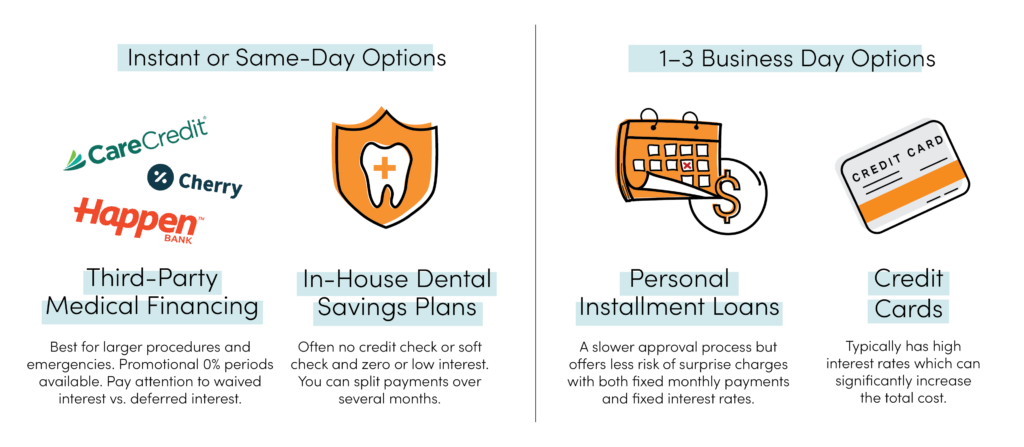
Instant or Same-Day Options: Usually the fastest paths to same-day treatment.
In-house dental payment plans
- Offered directly by some dental offices
- Often no credit check or soft check
- May require a down payment
- Usually, zero or low interest
Third-party medical credit cards (e.g., CareCredit)
- Instant online approval in many cases
- Promotional 0% periods available
- Requires careful attention to terms
1–3 Business Day Options: Work better when pain is manageable, and timing is flexible.
Personal installment loans
- Fixed monthly payments
- Fixed interest rate
- Less risk of surprise charges
- Slower approval process
Credit cards
- Immediate access if you already have one
- Typically, high interest rates
- Can significantly increase the total cost
In-House Dental Payment Plans: Often the Best First Question
Most people don’t know to ask, but many dentists are open to it.
In-house plans may:
- Split payments over several months
- Reduce or eliminate interest
- Be customized to your situation
Some offices will also offer a cash discount if you can pay part of the cost upfront.
Medical Credit Cards: Understand the Fine Print
Medical credit cards can help in emergencies, but they come with one major risk.
Waived Interest vs Deferred Interest
- Waived interest: Interest is truly zero if paid on time
- Deferred interest: Miss one payment, and interest is added retroactively to the entire balance
Always ask:
- “Is this deferred interest?”
- “What happens if I’m late once?”
If the terms feel confusing, pause and ask for clarification before signing.
Dental Savings Plans Can Lower the Bill First
A dental savings plan is not insurance. It is a membership that provides discounted rates at participating dentists. Not all emergency offices accept them, but it’s worth asking.
If available, this can:
- Reduce the total cost before financing
- Lower how much you need to borrow
A Script for When You Call: What to Say (Word for Word)
Money conversations are easier when you know what to say.
Try this:
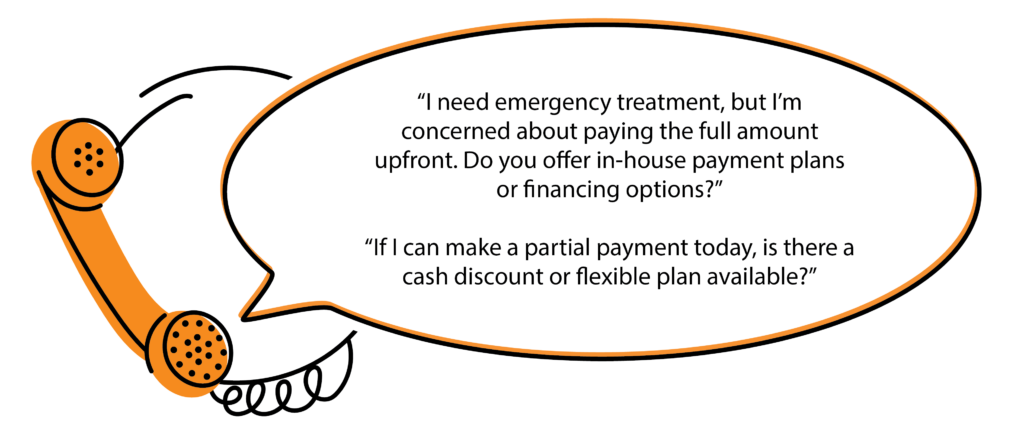
“I need emergency treatment, but I’m concerned about paying the full amount upfront. Do you offer in-house payment plans or financing options?”
If needed, follow with:
“If I can make a partial payment today, is there a cash discount or flexible plan available?”
This language signals seriousness without embarrassment and opens the door to options.
Getting a Second Opinion Can Save Thousands
Even in some emergencies, treatment plans can vary. If pain is controlled and infection is managed, a second opinion can change both treatment and cost.
One dentist may recommend:
- A crown
Another may offer:
- A temporary solution first
- A less expensive option
How Dentistry.com Helps in a Crisis
When you are under pressure, calling multiple offices is exhausting. Knowing your options early helps you make better financial decisions.
Dentistry.com helps you:
- Find dentists who handle emergency care
- Locate offices open to payment discussions
- Get evaluated quickly so costs and options are clear
Your Next Step
Emergency dental care should not force you into panic decisions or long-term debt. Payment plans, financing, and negotiated options exist, but you must know how to ask and where to go.
Dentistry.com connects you with local dentists who can evaluate your emergency, explain costs clearly, and help you find a payment solution that works.
Get the care you need now and protect your financial future. Haga clic en aquí o llámenos al (888)597-3896 para encontrar un dentista cerca de ti.
Need Help Finding a Dentist Today?
Información relacionada

Broken Permanent Retainer: Is It a Dental Emergency?
While a broken bonded retainer is rarely a medical emergency, you should make a dental appointment to prevent discomfort and tooth movement. Most dentists can usually solve the problem with a simple bonding fix.
Emergency Dentist Cost Without Insurance: Prices and Affordable Solutions
The first step in relieving acute tooth pain is an emergency dental exam. Without insurance, this typically costs $100-$300 dollars.
That appointment will allow for immediate pain management. If needed, you and the dental team can plan for additional treatment and discuss ways to break up the cost over time.
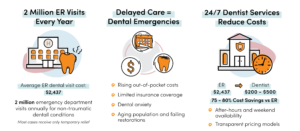
Rising Dental Emergencies Fuel Growth in After-Hours and Weekend Dentist Services
According to the American Dental Association, about 2 million people visit emergency departments each year for non-traumatic dental conditions. At first glance, a trip to the emergency room for a tooth problem might seem excessive, but many people simply don’t have other immediate options when severe dental pain hits.