Signs of a Dead Tooth: Grey Teeth and Pain Levels
Reviewed By Dr. Jody Bardash, DMD |
November 2025 • 5 min Read
Reviewed By Dr. Jody Bardash, DMD |
November 2025 • 5 min Read
If one tooth looks darker than the others, or if your tooth pain suddenly disappears, it is normal to feel alarmed. After all, teeth aren’t supposed to turn grey, and pain doesn’t usually vanish without a reason.
This guide explains the most common dead tooth symptoms, how pain levels change as a tooth dies, and what a dentist can do to keep infection from spreading.
What Is a “Dead” Tooth, Exactly?
A dead tooth is a tooth that no longer has a healthy blood supply. When blood flow stops, the nerve tissue inside the tooth dies, a process called necrosis. The tooth may still be physically in place, but biologically, it is no longer alive.
This condition always requires professional treatment, even if it does not hurt.
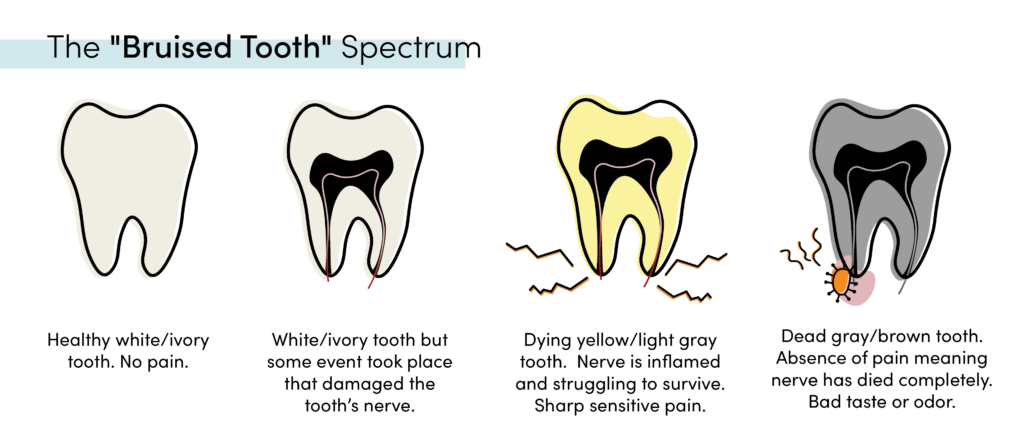
The 3 Stages of a Dying Tooth
Understanding the timeline helps explain why symptoms can feel confusing.
Stage 1: The Trigger
This is the event that damages the tooth’s nerve. At this stage, symptoms may be mild or easy to ignore.
- Deep cavity
- Crack or fracture
- Sports injury or fall
- Repeated dental trauma
Stage 2: The Warning
This is when most people notice something is wrong. These dying tooth symptoms indicate the nerve is inflamed and struggling to survive.
- Sharp sensitivity to cold or heat
- Lingering pain after temperature exposure
- Sudden jolts when biting
- Throbbing or aching pain
Stage 3: The Silence
This is the stage that often tricks people. The absence of pain does not mean healing; it usually means the nerve has died completely.
- Pain suddenly fades or disappears
- Tooth begins turning grey, brown, or black
- Pressure sensitivity or dull ache near the root
- Possible bad taste or odor
Why a Dead Tooth Turns Grey
Discoloration from a dead tooth comes from the inside out. As blood cells break down inside the tooth, they stain the internal structure, like how a bruise darkens under the skin.
This staining:
- Cannot be brushed away
- Will not respond to whitening strips
- Typically worsens over time
A grey tooth is one of the most visible signs of a dead tooth and should always be evaluated.
Does a Dead Tooth Always Hurt?
No, and that is what makes it dangerous. A dead tooth may cause:
- No pain at all
- Mild pressure sensitivity
- Pain only when infection spreads beyond the root
Once the nerve is dead, the tooth cannot feel temperature or decay. That doesn’t stop bacteria from spreading into the jawbone.
Think of it this way: a dying nerve is like a smoke alarm blaring to warn you of danger. A dead nerve is when the alarm goes silent, even though the fire is still spreading unseen.
Can a Dead Tooth Stay in Your Mouth?
Not safely without treatment. Leaving a dead tooth untreated can lead to:
- Tooth abscess
- Jawbone infection
- Facial swelling
- Infection spreading to other teeth or the bloodstream
Even if the tooth feels fine today, complications can develop silently.
How Dentists Treat a Dead Tooth
Treatment depends on how much structure remains and whether infection is present. Common options include:
- Root canal: Removes dead tissue, disinfects the tooth, and preserves it
- Crown: Restores strength and appearance after a root canal
- Extraction: Used when the tooth cannot be saved
If appearance is a concern, dentists also offer cosmetic solutions such as internal bleaching, veneers, or crowns.
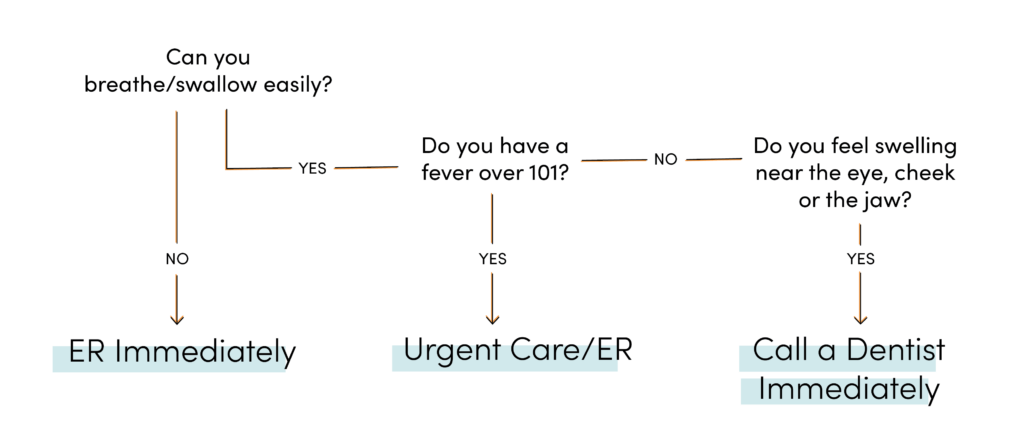
Is a Dead Tooth an Emergency?
It becomes urgent if you notice:
- Facial swelling
- Fever
- Increasing pressure or pain
- A pimple-like bump on the gums
Even without these signs, have a suspected dead tooth evaluated promptly to prevent infection.
What to Tell the Receptionist When You Call
Clear language helps you get prioritized quickly.
Say:
“I have a tooth that’s turning grey and may be dead. I’ve had changes in pain and need an urgent evaluation.”
Avoid saying only “tooth discoloration” or “old tooth pain.”
Your Next Step
A grey tooth, disappearing pain, or pressure in one tooth isn’t something to wait out. A dentist can confirm whether the tooth is dead with X-rays and explain your options before infection sets in.
Dentistry.com connects you with local dentists who can evaluate dead tooth symptoms, often with same-day appointments.
Find a dentist near you and get clear answers before a silent problem becomes serious. Haga clic en aquí or call (888) 597-3896 para encontrar un dentista cerca de ti.
About Dr. Jody Bardash, DMD
Dr. Jody Bardash is a lead clinician at Profesionales dentales de Fair Lawn, a family and cosmetic dentistry practice in Fair Lawn, New Jersey. With more than 30 years of experience, he is committed to delivering compassionate, high-quality care in dentistry and facial esthetics.
A graduate of Isaac Brauer College at Yeshiva University, Dr. Bardash stays at the forefront of innovation through advanced clinical training and continuing education. He is a member of the AACD, ADA, AGD, American Academy of Facial Esthetics, and the American Society for Dental Aesthetics. He also serves as a Clinical Instructor at Hackensack University Medical Center and Englewood Hospital and has been recognized by the Consumers’ Research Council of America for 25 years as one of the top dentists and facial injectors in the United States.

¿Necesita ayuda para encontrar un dentista?
Información relacionada

Dental Payment Plans: How to Finance Emergency Work
Dental emergencies rarely come with warning. One cracked tooth, abscess, or failed crown can turn into a four-figure bill overnight. When you are in pain, the stress of figuring out how to pay can feel just as overwhelming as the dental problem itself.

Broken Permanent Retainer: Is It a Dental Emergency?
While a broken bonded retainer is rarely a medical emergency, you should make a dental appointment to prevent discomfort and tooth movement. Most dentists can usually solve the problem with a simple bonding fix.

Emergency Dentist Cost Without Insurance: Prices and Affordable Solutions
The first step in relieving acute tooth pain is an emergency dental exam. Without insurance, this typically costs $100-$300 dollars.
That appointment will allow for immediate pain management. If needed, you and the dental team can plan for additional treatment and discuss ways to break up the cost over time.