A Loose Bond vs. a Broken Wire: How to Tell the Difference
Understanding what kind of break you’re dealing with will help you triage the situation.
If the retainer is just loose in one spot but not sharp or painful, it can usually wait a few days for a dental appointment. If the wire is cutting or irritating your tongue or cheek, it’s important to get to a dentist as soon as possible.
Qué hacer ahora mismo
1. Rinse Your Mouth
Use warm salt water to soothe irritation and keep the area clean.
2. Cover Sharp Edges
Apply orthodontic wax over any sharp or poking areas. Step-by-step instructions are below.
3. Do Not Cut the Wire Yourself
Cutting the wire at home risks swallowing or inhaling metal, cutting your gums or tongue, and making the professional repair more complicated.
4. Use a Removable Retainer If You Have One
Wear it temporarily if it fits easily. This can help protect your teeth and reduce irritation.
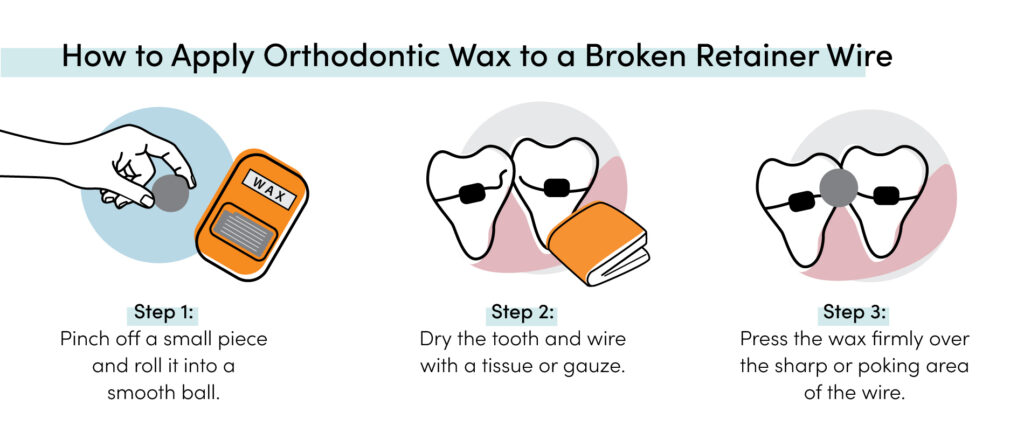
How to Apply Orthodontic Wax
Step 1: Pinch off a small piece of orthodontic wax and roll it into a smooth ball between clean fingers.
Step 2: Gently dry the tooth and wire with a tissue or gauze. Wax sticks much better to a dry surface.
Step 3: Press the wax firmly over the sharp or poking area of the wire until it fully covers the edge and feels smooth against your tongue or cheek.
Replace the wax as needed, especially after eating or drinking.
Will My Teeth Move Right Away?
While microscopic movement can begin within days, visible shifting usually takes weeks. This means there’s no need to panic, but you should schedule a repair within a week if possible. The sooner the retainer is fixed, the less likely it is that you’ll need additional orthodontic treatment later.
What If I Swallow a Piece of the Retainer?
In most cases, swallowing a small piece of retainer wire is harmless. That said, you should seek medical attention immediately if you experience:
- Persistent coughing or choking
- Trouble breathing
- Chest pain
Who Can Fix a Broken Permanent Retainer?
A general dentist can usually rebond a loose retainer, remove a broken wire, and refer you to an orthodontist if replacement is needed.
This is especially helpful if you’ve moved, your orthodontic treatment was years ago, or your original provider is no longer accessible.
How Much Does It Cost to Fix a Broken Bonded Retainer?
While costs vary depending on what’s needed, these are the averages.
- Simple rebonding: $50–$150
- Wire repair or replacement: $150–$400+
- Switching to a removable retainer: varies by provider
Keep in mind that repairs are often far less expensive than redoing orthodontic treatment once teeth have shifted.
What to Do If a Break Happens While Traveling
- Use a clean pencil eraser or cotton swab to gently push the wire away from your tongue or cheek
- Use orthodontic wax to stay comfortable
- Avoid hard or sticky foods
- Don’t attempt DIY repairs
- Haga clic en aquí o llámenos al (888) 597-3896 for help finding a local dentist
What to Expect at the Dentist
They’ll start by examining the retainer to see whether the issue is a loose bond or a broken wire. They may take X-rays if needed. Depending on the damage, they may rebond the existing wire, replace part or all of it, or remove it and recommend a removable retainer. Most repairs are quick and completed in a single visit.
About Anaheata Esmailzada, DDS
About Anaheata Esmailzada, DDS
Dr. Anaheata Esmailzada, DDS, known to her patients as Dr. Ana, is a dedicated dentist at Smile Design Specialist in North Arlington, New Jersey. She is widely recognized for her commitment to patient care, continuing education, and promoting the connection between oral health and overall wellness. Dr. Ana has completed over 7,000 hours of advanced training, focusing on creating healthy, lasting smiles and educating patients on preventive care. She is known for her patient-centered philosophy, often reminding her patients, “A body is not healthy if it doesn’t start with a healthy smile!”
Today, Dr. Anaheata Esmailzada is recognized as a top dentist by Leading Physicians of the World and for Excellence in Geriatric Treatment (AEGD).
Dr. Ana completed her residency at St. Joseph’s Hospital in Paterson in 2003. She earned her Doctor of Dental Surgery degree from Stony Brook University in 2001, where she was recognized as a member of both the Sigma Beta Honor Society and the Golden Key International Honor Society. Originally from Afghanistan, she moved to the United States at age 16 to pursue her dream of becoming a dentist.