Can the Dentist Give You Something for Anxiety? Your Options Explained Clearly
Reviewed By Dr. Anaheata Esmailzada, DDS
February 2026 • 6 min Read
Reviewed By Dr. Anaheata Esmailzada, DDS
February 2026 • 6 min Read
If fear or panic is keeping you from the dentist, you’ve got options. Dentists can help manage dental anxiety with safe, medically supervised options ranging from mild relaxing gas to stronger prescription medication. This guide explains exactly what dentists can offer, who can prescribe what, and how to ask for help without feeling judged.
Dental Anxiety Is Real and Treatable
Many people avoid dental care because of fear. Whether your anxiety comes from past trauma, panic disorder, sensitivity to noise or pain, or simply dread of the unknown, dentists treat anxious patients every day. You deserve care that feels safe and manageable.
Common fears include:
- “Will the dentist think I’m looking for drugs?”
- “Is laughing gas enough for me?”
- “Can I ask for something stronger, like a pill?”
- “Do I need a special dentist for anxiety medication?”
Dentists Can Give You Medication for Anxiety
Most dentists offer at least one form of anxiety control, and many offer multiple. Here are the main options:
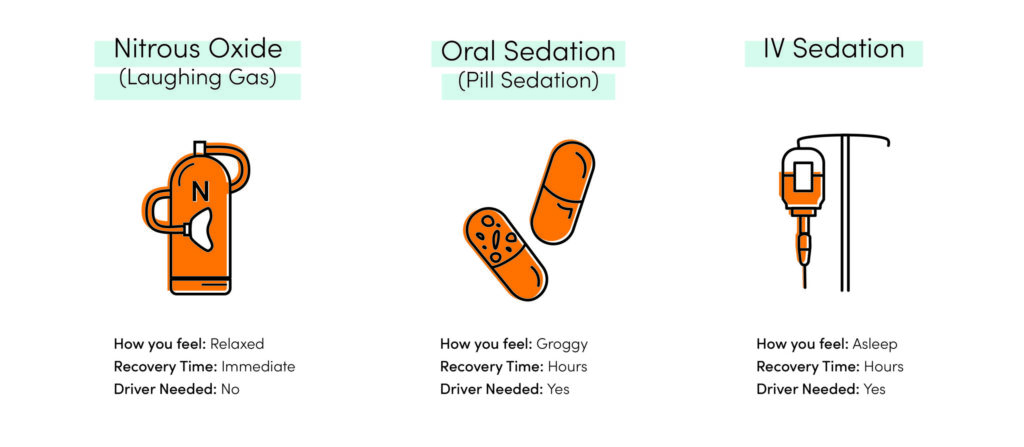
1. Nitrous Oxide (Laughing Gas)
Level: Mild sedation
How it feels: Calming, floaty, warm
How long it lasts: Wears off in minutes
Do you need a driver? No
Laughing gas is ideal if you want relaxation without heavy sedation. You stay awake and aware, but fear and tension lessen dramatically.
2. Oral Anxiety Medication (Prescription Pills)
Level: Moderate sedation
Common medications: Valium, Xanax, Ativan, Halcion
How it feels: Deep relaxation, less awareness of the procedure
Do you need a driver? Yes
These are benzodiazepines: true anti-anxiety medications that greatly reduce panic, racing thoughts, and muscle tension. Not all general dentists offer oral sedation, so you should call ahead to confirm, but many dentists prescribe:
- A pill the night before to help you sleep
- A pill an hour before the appointment for peak relaxation
3. IV Sedation
Level: Deep sedation
How it feels: Asleep-ish; may not remember the procedure
Do you need a driver? Yes
IV sedation is used by dentists with specialized training. It’s the best choice for severe phobias or procedures that would otherwise be overwhelming.
4. General Anesthesia (Less Common in General Offices)
Usually available only in oral surgery centers or hospital settings. This fully renders you unconscious and is reserved for major procedures or extreme anxiety.

What Most Patients Don’t Know (But Should)
- “Anxiety relief” and “pain relief” are different: You will still get local anesthetic (numbing). Anxiety medication is an addition, not a replacement for pain medication.
- Not all dentists offer oral or IV sedation: You must look specifically for “sedation dentistry” or ask directly.
- Medical history matters: Some conditions or medications may rule out certain sedatives.
- Feeling “awake” doesn’t mean you’re fully recovered: After oral or IV sedation, memory, judgment, and reflexes stay impaired for hours.
Not sure which type of anxiety treatment is right for you? A dentist can help you decide what will work best.
Si necesita ayuda para encontrar un dentista en su zona, haga clic en aquí o llámenos al (888) 597-3896.
Night Before vs. Day Of: How Anxiety Medication Works
The Night-Before Dose
Some dentists prescribe a very low dose of anti-anxiety medication to take the night before so you can sleep without dread or spiraling thoughts.
The One-Hour-Before Dose
Most oral sedation is taken 45–60 minutes before the appointment. It gradually reduces fear, lowers adrenaline, and helps you feel safe during the visit.
During the Procedure
Dentists may add:
- More oral medication
- Laughing gas on top of the pill
- A blanket, headphones, or breaks during treatment
How to Ask About Anxiety Medication Without Feeling Embarrassed
Many people fear being judged. Dentists understand anxiety and treat it clinically, not morally: a good dentist will meet these questions with empathy and customizable solutions.
You can say:
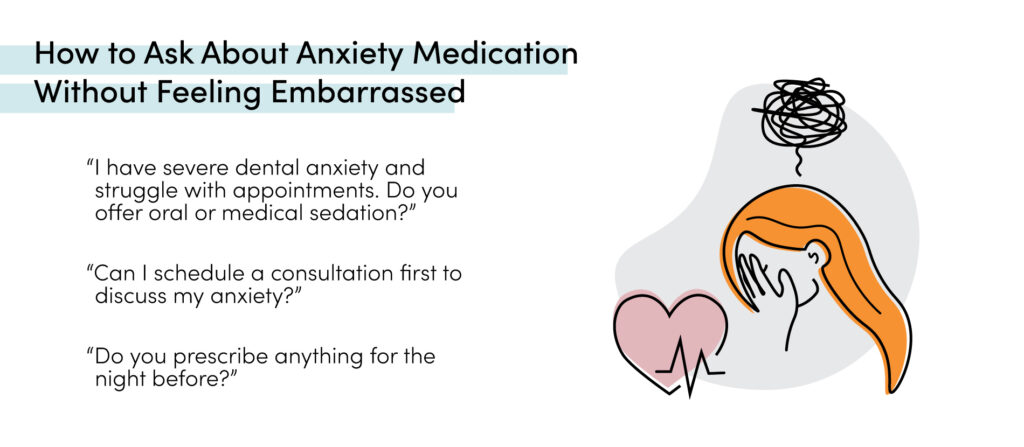
- “I have severe dental anxiety and struggle with appointments.”
- “Do you offer medication or sedation options for anxious patients?”
- “Can we discuss something to help me stay calm before and during the visit?”
A Script for Your Phone Call to the Dentist
When you find a dentist on our site, use this script to eliminate awkwardness and get straight to what you need:
“Hi, I’m looking for a dentist who can help with severe dental anxiety. Does your office offer laughing gas, oral sedation (like a pill), or stronger sedation options? And do you prescribe anything for the night before? Also, what is your policy for drivers?”
Choosing the Right Option for Your Anxiety Level
- Mild anxiety: Laughing gas alone may be enough
- Moderate anxiety or trouble sleeping the night before: Oral medication + laughing gas is the most common solution
- Severe anxiety, trauma history, or panic disorder: IV sedation or a combination of night-before and day-of medication is often recommended
What to Expect After Medication
After oral or IV sedation, you may experience:
- Forgetfulness
- Lightheadedness
- Slowed reaction time
- Drowsiness
- Difficulty with focus
These effects can last up to 24 hours. You’ll need someone to drive you home and stay with you for several hours.
Your Quick Dental Anxiety Checklist
- Dentists can prescribe anxiety medication
- Not all offices offer every option, so call to confirm
- You may receive a night-before and day-of plan
- You will still get numbing for pain control
- Always have a driver for pills or IV sedation
- Ask any questions you have openly: dental anxiety is both common and treatable
About Dr. Anaheata Esmailzada, DDS
Dr. Anaheata Esmailzada, DDS, known to her patients as Dr. Ana, is a dedicated dentist at Smile Design Specialist in North Arlington, New Jersey. She is widely recognized for her commitment to patient care, continuing education, and promoting the connection between oral health and overall wellness. Dr. Ana has completed over 7,000 hours of advanced training, focusing on creating healthy, lasting smiles and educating patients on preventive care. She is known for her patient-centered philosophy, often reminding her patients, “A body is not healthy if it doesn’t start with a healthy smile!”
Today, Dr. Anaheata Esmailzada is recognized as a top dentist by Leading Physicians of the World and for Excellence in Geriatric Treatment (AEGD).
Dr. Ana completed her residency at St. Joseph’s Hospital in Paterson in 2003. She earned her Doctor of Dental Surgery degree from Stony Brook University in 2001, where she was recognized as a member of both the Sigma Beta Honor Society and the Golden Key International Honor Society. Originally from Afghanistan, she moved to the United States at age 16 to pursue her dream of becoming a dentist.
Need a Dentist Who Treats Anxiety With Care?
Información relacionada

Broken Permanent Retainer: Is It a Dental Emergency?
While a broken bonded retainer is rarely a medical emergency, you should make a dental appointment to prevent discomfort and tooth movement. Most dentists can usually solve the problem with a simple bonding fix.

Emergency Dentist Cost Without Insurance: Prices and Affordable Solutions
The first step in relieving acute tooth pain is an emergency dental exam. Without insurance, this typically costs $100-$300 dollars.
That appointment will allow for immediate pain management. If needed, you and the dental team can plan for additional treatment and discuss ways to break up the cost over time.

Rising Dental Emergencies Fuel Growth in After-Hours and Weekend Dentist Services
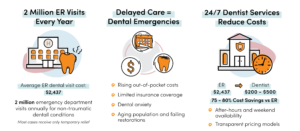
According to the American Dental Association, about 2 million people visit emergency departments each year for non-traumatic dental conditions. At first glance, a trip to the emergency room for a tooth problem might seem excessive, but many people simply don’t have other immediate options when severe dental pain hits.