imagen del cargador

Odontología

How Long Does a Temporary Filling Last? Exact Duration and When to See Your Dentist

Doctor Profile Image

Revisado por Dr. Dennis Rollins, DDO |

Julio de 2025 - 6 min Leer

Reviewed By Dr. Dennis Rollins, DDO | Julio 2025 - 6 min Read

A temporary filling typically lasts 2 to 6 weeks, but this can vary widely. Depending on the material used, where it’s located, and how well you care for it, it can last up to 3 months. If you chew hard foods or grind your teeth, it can fall out within a few days.   

Read on for guidance on caring for a temporary filling, and what to do if it falls out before your next dentist appointment.  

How Temporary Fillings Are Used

A temporary filling protects a tooth for a short period before a permanent solution is put in place. Dentists often use them after procedures like root canals, during multiple-step treatments, or to monitor how a tooth responds before deciding on the next steps. Temporary fillings protect the tooth from bacteria, food particles, and debris, helping reduce the risk of infection or further decay. 

Dentists choose from a variety of materials for temporary fillings, based on the specific situation:  

  • Zinc oxide-eugenol (ZOE) has a soothing effect on sensitive teeth but is relatively soft and short-lived.  
  • Glass ionomer cement usually lasts longer, forming a stronger bond to the tooth and slowly releasing fluoride to help prevent decay.  
  • Intermediate restorative materials are reinforced versions of ZOE that offer improved durability. Some dentists use temporary composite resins, which closely resemble natural tooth color and provide a smoother, more natural feel.  


No matter which material is used, caring for a temporary filling is crucial to the success of your overall treatment. 

Caring for a Temporary Filling

Follow these guidelines to help ensure that your temporary filling lasts until your next dentist appointment.   

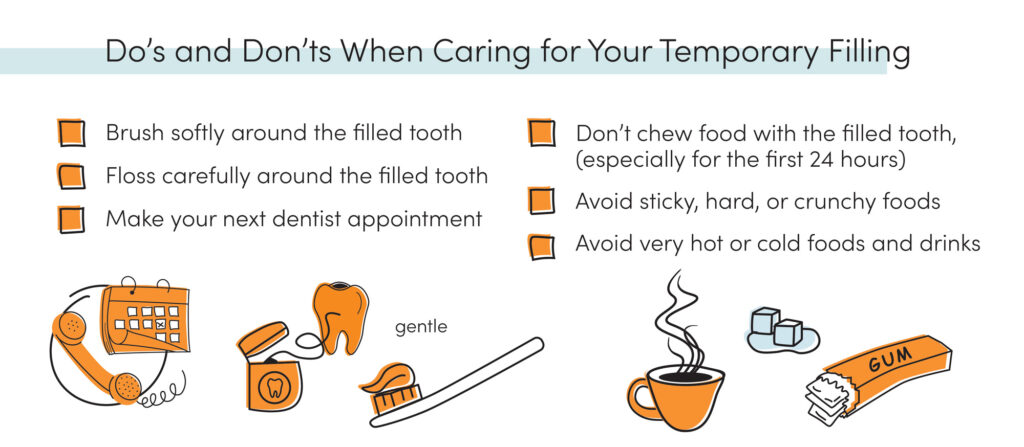
  • Try not to chew on the tooth with the filling, especially for the first 24 hours after the filling is put in place. 
  • Avoid sticky, hard, or crunchy foods like gum, caramel, nuts, or ice. Tough foods can pull out or damage the temporary filling. 
  • Brush softly around the filled tooth to avoid dislodging it. Use a soft-bristled toothbrush and gentle motions. 
  • Floss carefully around the filled tooth, sliding the floss out instead of pulling it upward. 
  • Avoid very hot or cold foods and drinks, which can cause sensitivity or make the temporary material expand or contract. 
  • Keep your next dentist appointment, so that your temporary filling can be replaced with a more permanent solution. 
Do’s and don’ts for caring for a temporary dental filling, including brushing gently and avoiding hard or sticky foods

How Temporary Fillings Are Used

If you’re wondering if your temporary filling is loose or has fallen out, ask yourself these questions: 

  • Do you feel a hole or rough spot? The filled tooth may feel uneven, rough, or like it has a gap when you run your tongue over it. 
  • Are you experiencing increased sensitivity or pain? You might notice discomfort when eating or drinking something hot, cold, or sweet. 
  • Does food get stuck easily? If food starts collecting around the filled tooth, it could mean the filling is missing or loose. 
  • Do you notice something hard in your mouth? Sometimes you might feel or even bite down on the filling material after it comes loose. 
  • Can you see the space where the filling should be? If you look in a mirror, you may see an opening or darker area on the filled tooth. 


If the answer to any of these questions is yes, don’t worry. A failed temporary filling is common and easy to deal with. Read on to see what to do about it.  

What to Do If Your Temporary Filling Falls Out

The most important step is to make an appointment with a dentist. Even if you’re not in pain, the tooth will need to be resealed as quickly as possible.  

Haga clic en aquí for help finding a dentist near you or call us at (888) 597-3896.

In the meantime: 

  • Avoid poking the affected tooth, as this could irritate or damage the tooth. 
  • Keep the area clean by rinsing your mouth with warm salt water (½ teaspoon of salt in a cup of water). Gently brush the area with a soft toothbrush. 
  • Continue to avoid hard, sticky, or chewy foods, as this can worsen sensitivity or cause further damage. 
  • Manage any pain with over-the-counter pain relievers (such as ibuprofen or acetaminophen) and by avoiding hot or cold foods and drinks. 
  • Consider a temporary dental repair material. Many pharmacies sell over-the-counter temporary filling kits that can protect the tooth until your dental appointment. Follow the package directions carefully. 


Keep in mind that ignoring a lost or damaged temporary filling can lead to more serious complications. Without the protective barrier of the filling, the exposed tooth becomes vulnerable to bacteria, food particles, and decay.  

What to Expect at Your Appointment

If your temporary filling has fallen out, the dentist will start by examining the tooth to ensure no parts of the temporary filling remain. They may take an X-ray to check for signs of decay, infection, or other underlying issues. Next, they’ll thoroughly clean the area. 

Depending on your treatment plan, the dentist will either replace the temporary filling or move forward with the permanent restoration. Finally, your dentist will check your bite alignment to make sure you’re comfortable. 

The cost of replacing a temporary filling typically ranges from $50-$150. Some practices might not charge for the replacement if it’s part of an ongoing treatment plan. Feel free to ask about exact pricing when you make your appointment.  

¿Necesita ayuda para encontrar un dentista?