imagen del cargador

Odontología

Emergency Root Canal Treatment Guide

Severe tooth pain can make it hard to think straight. If you’re feeling sharp, throbbing, or radiating pain in one tooth—especially when chewing or touching it—you may need an emergency root canal. This guide explains what’s happening inside your tooth, what to do right away for relief, and how to find a dentist or endodontist who can help fast.

Dr. Esmailzada, DDS in North Arlington, New Jersey

Reviewed By Dr. Anaheata Esmailzada, DDS | 
November 2025 • 6 min Read

Dentist performing dental procedure on patient during root canal treatment with professional dental tools and care

When a Root Canal May Be Needed

Severe toothache icon showing cracked tooth with ongoing pain and possible root canal symptoms

Severe, Persistent Toothache

Constant, throbbing pain that doesn’t subside and often worsens when biting or chewing.

Illustration of a tooth with a thermometer symbol representing lingering sensitivity to hot and cold

Lingering Sensitivity

Sharp or prolonged pain from hot or cold that continues well after the source is removed.

Swollen and tender gums illustration beside infected tooth showing gum inflammation and dental pain

Swollen or Tender Gums

Redness, puffiness, or a pimple-like bump near the tooth may signal an underlying infection.

Visible tooth damage illustration showing cracked tooth with decay and signs of severe dental problems

Visible Tooth Damage

A cracked, chipped, or deeply decayed tooth can expose the inner layers and irritate the nerve.

Persistent tooth pain icon showing inflamed tooth with nerve pain and dental infection symptoms

Pain That Won’t Resolve

Intense pain is not normal and rarely goes away on its own without professional treatment.

Signs of spreading tooth infection illustration with facial swelling, fever, or difficulty swallowing

Signs of Spreading Infection

Facial swelling, fever, or difficulty swallowing require urgent dental care or a visit to the ER.

What to Expect During a Dental Visit for a Root Canal

Evaluación

You’ll describe your pain: how long it’s lasted, what triggers it, and whether it radiates to your jaw or ear.

Testing

Targeted X-rays and sensitivity tests to reveal infection, bone loss, abscesses, or affected nerves.

Tratamiento

Your dentist will explain the next step, either an emergency root canal or a same-day referral to an endodontist.

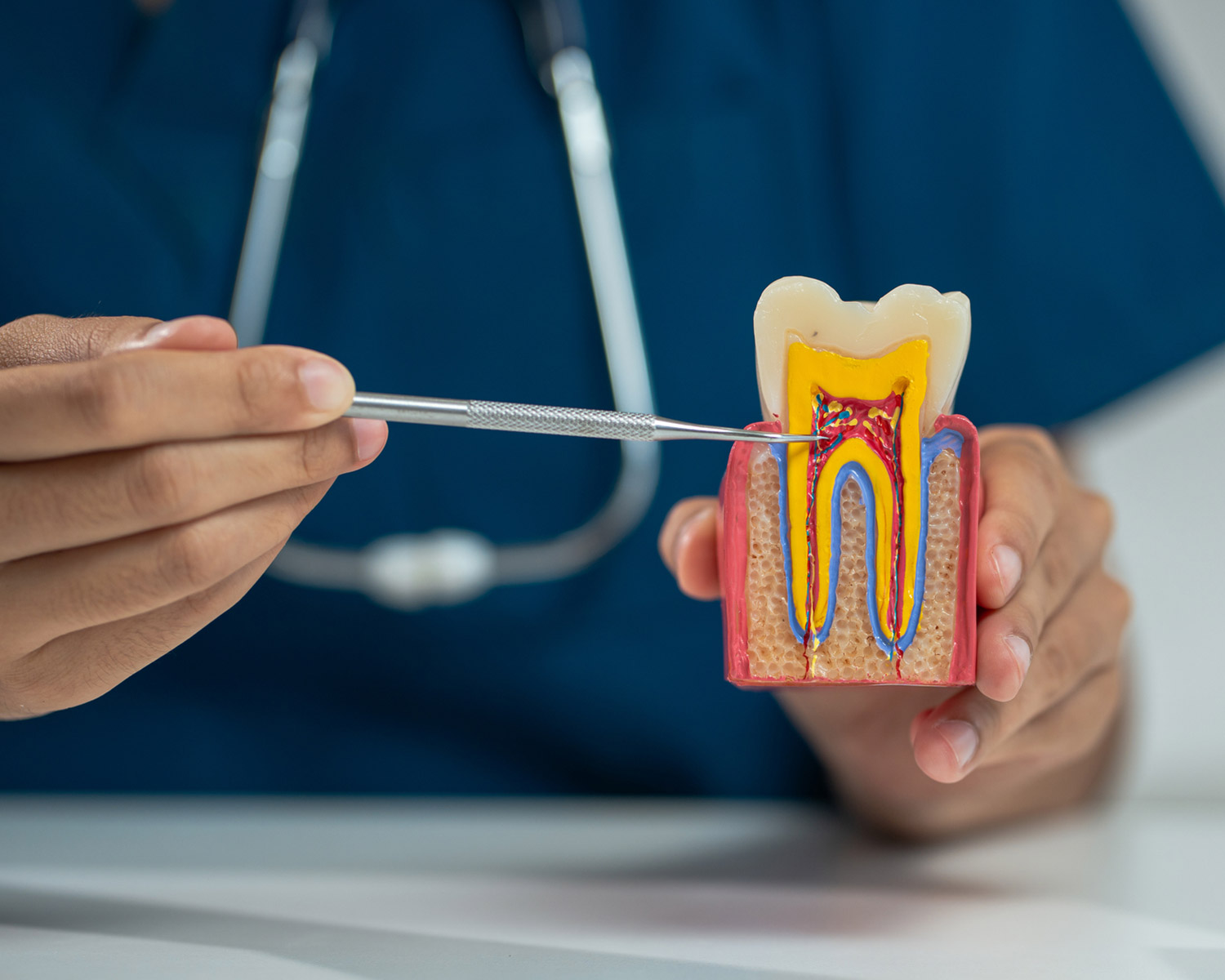
Dentist explaining root canal treatment using tooth cross-section model showing infected pulp and tooth anatomy

What a Root Canal Does

A root canal—also called endodontic treatment—removes the infected or damaged soft tissue (pulp) inside your tooth, which is causing you pain. The space is then disinfected and sealed, saving your natural tooth and preventing reinfection.

Think of it as a deep cleaning inside the tooth’s roots, rather than a painful drilling procedure. The treatment is done under local anesthesia, so you’ll feel pressure but no pain.

What to Expect During Treatment

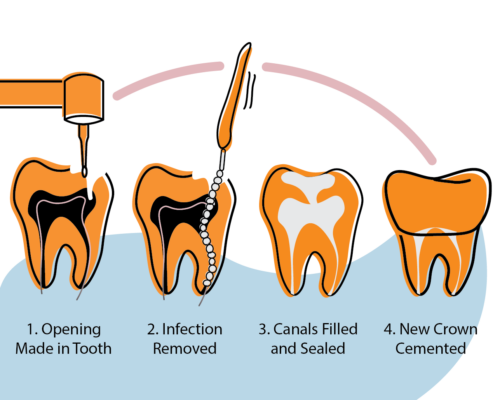
During treatment, your dentist will first numb the area with local anesthesia to ensure you’re comfortable. A thin rubber sheet, called a dental dam, is used to keep the tooth dry and saliva-free. The dentist then creates a small opening to remove the infected pulp and thoroughly clean and disinfect the root canal, which often brings immediate relief. Once cleaned, the canals are filled with a rubber-like material and sealed, with a temporary filling placed for protection. Finally, a crown or permanent filling is added to restore strength and full function to the tooth.

Root canal procedure steps illustration showing infection removal, canal filling, and crown placement

Por qué no debe esperar

A root canal isn’t just about stopping pain; it’s about stopping infection at its source. If severe tooth pain suddenly disappears, it may not be good news. It can mean the nerve has died while infection continues to spread. In this case, it’s important to call a dentist right away. Without treatment, the infection can worsen, leading to an abscess, tooth loss that may require an implant or bridge, or even spread to the jaw, face, or bloodstream.

Si necesita ayuda para encontrar un dentista en su zona, haga clic en aquí o llámenos al (888) 597-3896.   

General Dentist vs. Endodontist: Who Should You See?

Choosing between a general dentist and an endodontist depends on your situation. A general dentist is typically the first step, handling diagnosis, immediate pain relief, and many routine root canals. However, if your case is more complex, such as an advanced infection, retreatment, or a tooth with curved or multiple canals, you may be referred to an endodontist. These specialists have advanced training and tools designed to treat difficult cases with greater precision and success.

ER or Dentist: Know Where to Go

If you’re unsure where to go, start by calling a 24-hour dentist who can assess your symptoms and guide you to the right care. Go to the ER if you have swelling that interferes with breathing or swallowing, fever or chills with spreading facial redness, or major trauma to your jaw or face. For issues like severe tooth pain, an abscess without breathing problems, a cracked or decayed tooth, or pain that’s worsening or unrelenting, contact a dentist or endodontist for prompt treatment.

Your Emergency Call Script

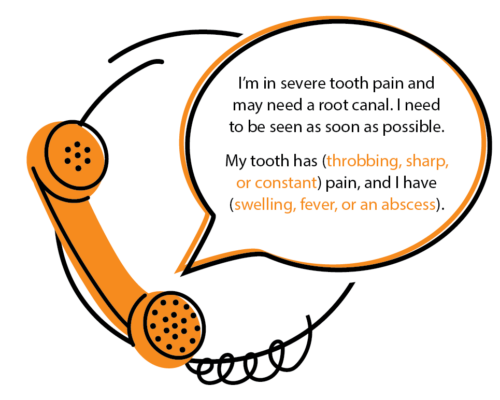
When you call a dental office for urgent care, be prepared to clearly explain your situation. Most offices hold same-day appointments for emergencies, and after-hours calls are often routed to an on-call dentist or endodontist. Start by saying, “I’m in severe tooth pain and may need a root canal. I need to be seen as soon as possible.” Be ready to describe the type of pain, whether it’s throbbing, sharp, or constant, and mention any swelling, fever, or abscess. Also, share when your symptoms began and whether they’re getting worse.

Orange telephone graphic with a speech bubble explaining that severe tooth pain may require a root canal, with symptoms like throbbing, sharp, or constant pain and swelling or fever.

What to Do Before Your Appointment

While waiting for your appointment, there are a few safe ways to manage pain and protect your tooth. Take an over-the-counter pain reliever like ibuprofen or acetaminophen, rinse with warm salt water to reduce inflammation, and apply a cold compress to your cheek for about 15 minutes to ease swelling. Avoid chewing on the affected side and keep your head elevated when lying down to reduce throbbing. Do not place aspirin directly on the gums or use heat, as both can worsen infection and damage tissue.

Recovery and Aftercare

A properly treated and restored tooth can last a lifetime with regular care. After your procedure, it’s normal to experience mild tenderness for a few days, which can be managed with over-the-counter pain relief as directed. Avoid biting into hard foods on the treated tooth until your permanent crown is placed to prevent damage. Continue practicing good oral hygiene, including brushing and flossing, and be sure to attend your follow-up appointment to complete the final restoration and ensure long-term success.

Cost and Insurance

Don’t delay treatment because of cost; waiting can lead to the need for more extensive and expensive care later. Most dental insurance plans cover 50–80% of root canal therapy, depending on your deductible and plan limits. If you don’t have dental insurance, many dental offices offer payment plans or third-party financing, cash discounts, or even in-house savings programs.

Illustration of an orange calendar, a dollar-sign coin, and a dental insurance card representing dental insurance costs or payments.

Pregunte a un dentista: Dr. Dennis Rollins:

¿Cuándo una extracción dental es urgente y cuándo puede esperar?

Class aptent taciti sociosqu ad litora torquent per conubia nostra, per inceptos himenaeos. In hac habitasse platea dictumst. Aenean dignissim, nibh sed iaculis hendrerit, velit risus rhoncus massa, in dictum nulla lectus ac eros. Phasellus laoreet mauris turpis, eget varius nisl tempor nec. Fusce eget ante mattis diam blandit cursus. Vivamus dignissim est sit amet tellus venenatis varius.

Nunc blandit libero sit amet odio ornare, eget suscipit lacus blandit. Quisque bibendum laoreet convallis. Vestibulum vestibulum posuere risus at scelerisque. Vestibulum ante ipsum primis in faucibus orci luctus et ultrices posuere cubilia curae; Mauris sed sapien bibendum, maximus eros ut, volutpat erat.


a6b991d870a05a89297b4f8e2488755dc7375dcb (1) (1)

Find Root Canal Treatment Near You

Don’t suffer through another sleepless night. A root canal can stop the pain, save your tooth, and protect your health. Call now to schedule your emergency appointment.

Preguntas frecuentes

Is a root canal painful?

The procedure is done under local anesthesia, and patients typically feel pressure, not pain. The real pain comes from the infection itself, so removing infected tissue and thoroughly cleaning the area brings immediate relief.

Usually, 90 minutes to 2 hours per tooth. Complex cases may need two visits.

A specialist in diagnosing and treating problems with tooth pulp and roots, often handling complex or emergency cases.

Most molars and premolars will. A crown protects the tooth from fracture and restores normal function.

Persistent or returning pain, swelling, or gum bumps may signal reinfection. Your dentist or endodontist can retreat or correct the issue.

Extraction, followed by a bridge or implant. Saving the natural tooth is almost always less expensive and better for long-term health.

Wait until numbness wears off. Avoid hard or sticky foods if you have a temporary filling.

With proper care, a root canal–treated tooth can last a lifetime.

The steps are the same, but urgent cases often start with immediate pain relief and infection control before full sealing at a follow-up visit.