
Should You Go to the ER for Tooth Pain? A Quick Guide

Reviewed By Dr. Dennis Rollins, DDO |
July 2025 • 6 min Read
Reviewed By Dr. Dennis Rollins, DDO | July 2025 • 6 min Read
Whether you should go to the ER for tooth pain depends on the severity of your pain and what other symptoms you’re experiencing. Read on for help deciding how to find relief.
When to Go to an Emergency Dentist
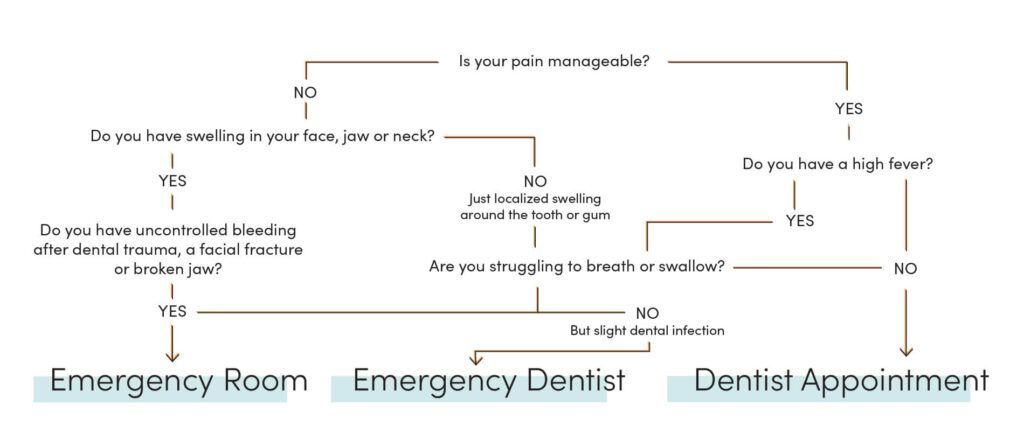
If your tooth pain is severe and not relieved by over-the-counter medication, a visit to the emergency room might be the right move. This is especially true if:
- You have swelling that is spreading to your face, jaw, or neck.
- You’re struggling to breathe or swallow.
- You have a high fever.
- You have uncontrolled bleeding after a dental trauma or extraction.
- You’ve sustained facial fractures or a broken jaw.
An emergency room staff is equipped to address life-threatening complications and offer temporary pain relief. While they usually cannot fix the tooth itself, they can help prevent the situation from becoming critical.
“The amount that we can do for a toothache is focused more on what’s the main cause and whether there’s an infection in terms of treating it with antibiotics, and then, obviously, pain control,” says Dr. Jeffrey Druck, an emergency physician, in an interview with University of Utah Health. “But that being said, for long-term care, there’s no question that the dentist is the right place to go.”
If none of the above describe your symptoms, read on.
When to Go to the ER
An emergency dentist is the better choice if:
- Your pain is persistent and significant but is temporarily manageable with over-the-counter pain relievers.
- You have localized swelling around the tooth or gum, but it’s not spreading to your face or neck.
- You suspect a dental infection but have no fever, breathing issues, or difficulty swallowing.
- You have a minor dental injury (such as a chipped, cracked, or knocked-out tooth) but no severe bleeding or jaw trauma.
An emergency dentist can quickly diagnose the cause of tooth pain and swelling, provide immediate relief from pain, and initiate treatment. They can also perform urgent procedures like extractions or temporary restorations.
Your first step, of course, is to find out what emergency dentist is available when you need treatment. Many offer extended hours, and some are open 24/7. If you can’t find one that’s currently open in your area, you may have to contact an on-call dentist to make an appointment.
For help finding a dentist in your area, click here or call us at (888) 597-3896.
And what if you don’t meet the criteria for an emergency room visit, but you cannot immediately get in with an emergency dentist?
When to Go to an Urgent Care Clinic
The providers at an urgent care clinic can rule out early complications and prescribe antibiotics and stronger pain medication. They usually cannot perform dental procedures, but they can help you manage your symptoms until you can see a dentist.
It’s worth noting that urgent care clinics generally have much shorter wait times than emergency rooms. This is because ERs treat life-threatening cases first, while urgent care operates on a first-come, first-served system for non-critical cases.
When to Wait
If your tooth pain is minor and manageable, and you’re not experiencing any of the other symptoms listed above, it’s generally best to schedule a regular dentist appointment. While you wait for that appointment, you can:
- Use over-the-counter pain relievers as directed on the label.
- Rinse your mouth with warm salt water to help clean the area and reduce inflammation.
- Apply a cold compress to the outside of your cheek.
- Avoid very hot, cold, or sugary foods.
- Gently brush and floss around the affected tooth to remove food particles.
“When getting out of tooth pain, it’s all about controlling swelling. Reduce the swelling and you reduce the pain,” writes Mark Burhenne, DDS, for askthedentist.com, adding that “it’s important to have a complete exam at the dentist to identify the root cause of a toothache in order to understand the best way to address it.”
What If I Have Anxiety About Getting Treatment?
Anxiety combined with tooth pain can certainly be challenging, but delaying care can often make the situation worse. Try focusing on one step at a time that will move you toward relief.
Consider finding a dentist who offers nitrous oxide (laughing gas), oral sedation pills, IV sedation, or other pain management and anxiety-friendly solutions to help you relax during your appointment.
Explain your concerns before treatment, ask as many questions as you like, and let your dentist know if your discomfort spikes or you need a moment. It can also help to bring a trusted friend or family member along with you for support.
Comparing Costs
Here’s a quick comparison table comparing typical costs and coverage for various treatment options. If you have insurance, it’s important to check on the details of your plan to see what will or will not be covered.
| Care Option | Typical Cost | Coverage |
|---|---|---|
| Emergency Room Visit | $400 – $1,500 | Billed under health insurance. If you do not have insurance or haven’t met your deductible, out-of-pocket costs can be significant. |
| Urgent Care Clinic | $100–$300 | Covered by health insurance. Typically lower costs than an ER visit, even if you need to pay out of pocket. |
| Emergency Dentist | $100 – $1,000 | Covered by dental insurance, although coverage varies by plan. Many offices offer memberships, payment plans, and discounts for cash payments. |
| Typical Cost | Coverage |
|---|---|
| Emergency Room Visit | |
| $400 – $1,500 | Billed under health insurance. If you do not have insurance or haven’t met your deductible, out-of-pocket costs can be significant. |
| Urgent Care Clinic | |
| $100–$300 | Covered by health insurance. Typically lower costs than an ER visit, even if you need to pay out of pocket. |
| Emergency Dentist | |
| $100 – $1,000 | Covered by dental insurance, although coverage varies by plan. Many offices offer memberships, payment plans, and discounts for cash payments. |
After-Care Steps
If you receive care at an emergency room or urgent care clinic, a vital next step is to make an appointment with a dentist. It’s also important to take any prescribed antibiotics and pain medications exactly as directed.
Avoid hard, hot, or cold foods that might aggravate the tooth, and maintain good oral hygiene, brushing and flossing gently to avoid irritating the painful spot.
Continue to closely monitor your symptoms, and if pain, swelling, fever, or bleeding worsens, seek urgent care.
Tips for Preventing Tooth Pain
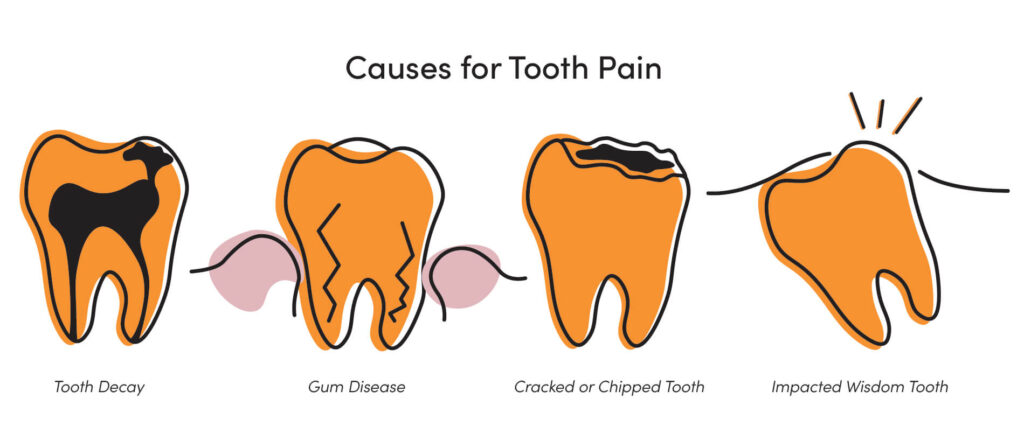
There are many common causes for tooth pain, including:
- Tooth decay (cavities) – bacteria eroding enamel and exposing the sensitive inner layers of a tooth.
- Dental abscess – infection in the tooth or gums, causing swelling and throbbing pain.
- Gum disease – inflammation or infection of the gums, leading to tenderness and sensitivity.
- Cracked or chipped tooth – exposing nerve tissue and causing sharp pain.
- Tooth sensitivity – reaction to hot, cold, or sweet stimuli due to enamel wear or gum recession.
- Impacted wisdom teeth – pressure and inflammation from third molars that can’t fully emerge or grow in normally.
- Teeth grinding – causing soreness, cracks, or wear over time.
You can prevent some of these by brushing and flossing daily, limiting sugary foods and drinks, and visiting your dentist for regular checkups and cleanings.
Find Relief
The answer to tooth pain is not to do nothing. Use the information above to identify the right course of action for you and your symptoms and get the care you need to start feeling better.
Need Help Caring for Tooth Pain?
Related Information

How Much Is a Dentist Visit Without Insurance? Exact Costs Explained
Below, you’ll find a breakdown of typical out-of-pocket costs for common dental procedures, along with the reasons behind these costs. Keep in mind that these costs can vary significantly based on your location, the dentist’s experience, the materials used, and the complexity of the procedure.
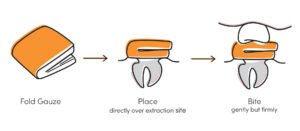
How to Stop Bleeding After Tooth Extraction: Easy Tips for Immediate Relief
After a tooth extraction, some bleeding at the site is normal and will usually slow down within 2-3 hours. Gentle oozing (think pink saliva) will often continue for the first 24 hours. Below you’ll find tips for helping to stop the bleeding, and how to tell the difference between normal recovery and signs that you should call your dentist.

Dental Anxiety: Proven Strategies to Stay Calm During Your Appointment
If you’re feeling anxious about an upcoming dental visit, we can tell you this is completely normal. In fact, dental anxiety is something our dentists help people navigate all the time. Read on for practical tips, and to hear from other patients who experience dental anxiety.