
Broken Tooth Repair Cost: From Bonding to Crowns

Reviewed By Dr. Peter Do, DDS
November 2025 • 6 min Read
Reviewed By Dr. Peter Do
November 2025 • 6 min Read
If you’ve chipped or cracked a tooth, you’re likely dealing with two problems at once: physical discomfort and financial panic. You’re not just wondering “How bad is this?”, you’re wondering “How much will this cost me?”
This guide gives you clear, realistic price ranges, explains what affects the cost, and shows you how acting quickly can save you hundreds, or even thousands, of dollars.
How Much Does It Cost to Fix a Broken or Chipped Tooth?
Your exact cost depends on the type of break, which can only be confirmed by an X-ray. But the following are the standard price ranges most patients fall into.
| Procedure | Typical Cost | When It's Needed |
|---|---|---|
| Tooth Bonding (Minor Chips & Small Cracks) | $100–$400 per tooth | Great for small cosmetic chips on front teeth. Fast, painless, and the most affordable fix. |
| Dental Veneers (Cosmetic Front-Tooth Repair) | $500–$2,500 per veneer | Used when front teeth require a flawless cosmetic finish. Insurance rarely covers veneers because they’re elective. |
| Dental Crowns (For Larger Breaks or Broken-Through Teeth) | $800–$2,500 per crown | Necessary when the structure of the tooth is compromised. Material choice (porcelain, zirconia, metal) affects cost significantly. |
| Root Canal + Crown (If the Nerve Is Affected) | Root canal: $700–$1,600; Crown: $800–$2,500 | If bacteria reach the pulp, you’re looking at both procedures. This is the most common cost outcome when someone waited too long to fix a chip. |
| Extraction + Dental Implant (Severe or Untreated Breaks) | Extraction: $150–$400; Implant + crown: $3,000–$6,000+ | This is the “worst-case scenario” and typically the result of extensive damage or delayed treatment. |
| Typical Cost | When It's Needed |
|---|---|
| Tooth Bonding (Minor Chips & Small Cracks) | |
| $100–$400 per tooth | Great for small cosmetic chips on front teeth. Fast, painless, and the most affordable fix. |
| Dental Veneers (Cosmetic Front-Tooth Repair) | |
| $500–$2,500 per veneer | Used when front teeth require a flawless cosmetic finish. Insurance rarely covers veneers because they’re elective. |
| Dental Crowns (For Larger Breaks or Broken-Through Teeth) | |
| $800–$2,500 per crown | Necessary when the structure of the tooth is compromised. Material choice (porcelain, zirconia, metal) affects cost significantly. |
| Root Canal + Crown (If the Nerve Is Affected) | |
| Root canal: $700–$1,600; Crown: $800–$2,500 | If bacteria reach the pulp, you’re looking at both procedures. This is the most common cost outcome when someone waited too long to fix a chip. |
| Extraction + Dental Implant (Severe or Untreated Breaks) | |
| Extraction: $150–$400; Implant + crown: $3,000–$6,000+ | This is the “worst-case scenario” and typically the result of extensive damage or delayed treatment. |
Front vs. Back Teeth: Why the Price Isn’t the Same
The location of the tooth dramatically affects the repair bill. Repairing a front tooth may cost more because you’re paying for art as well as function.
Front Teeth (Incisors & Canines)
- Prioritizes appearance
- Uses cosmetic materials like composite bonding or porcelain veneers
- Price increases with the level of aesthetic detail required
- More likely to use veneers if the chip is visible when smiling
Back Teeth (Premolars & Molars)
- Must withstand high chewing force
- Often requires stronger materials like zirconia or metal-based crowns
- Less about beauty, more about durability
- Stronger materials mean higher cost, especially for crowns or root canals
The “Cost of Waiting” Reality Check
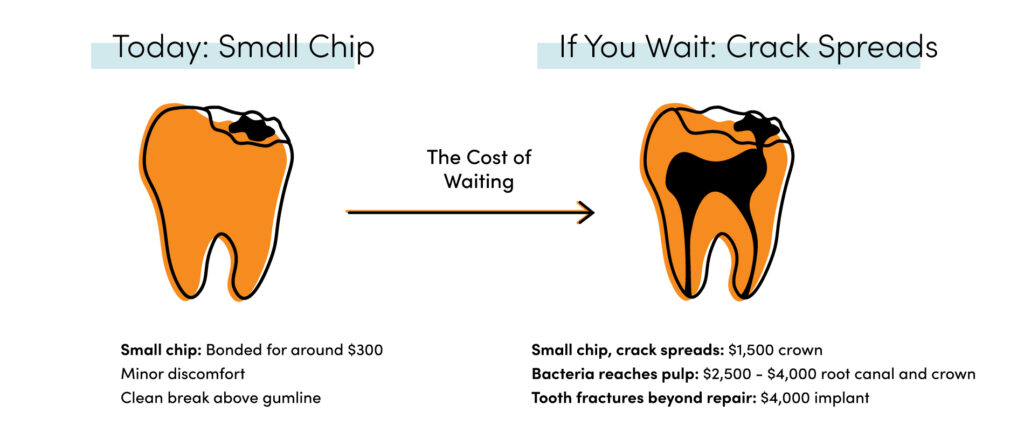
Most people assume waiting saves money. It doesn’t. A $300 repair today can become a $3,000–$6,000 problem. This is the single biggest financial reason to call a dentist immediately.
Today:
- Small chip: Bonded for around $300
- Minor discomfort
- Clean break above gumline
If You Wait:
- Small chip, crack spreads: $1,500 crown
- Bacteria reach pulp: $2,500-4,000 root canal and crown
- Tooth fractures beyond repair: $4,000 implant
For help finding a dentist in your area, click here or call us at (888) 597-3896.
Will Insurance Cover This?
Most insurance plans cover:
- Crowns
- Root canals
- Extractions
- Part of bonding (depends on the plan)
Insurance rarely covers:
- Veneers
- Cosmetic-only repairs
If you’re uninsured, many offices offer:
- Monthly payment plans
- Financing (e.g., CareCredit)
- Discounts for same-day treatment
How to Know What You Actually Need
Trying to diagnose yourself online often leads to unnecessary worry, or worse, delayed treatment. Only a dentist with an X-ray can confirm:
- How deep the crack runs
- Whether the nerve is exposed
- Whether bonding is enough or a crown is required
- Whether infection has already begun
When a Broken Tooth Is an Emergency
Even painless chips should be evaluated quickly to avoid the cost cascade. Call a dentist right away if you have:
- Sharp pain when biting
- Sensitivity to temperature
- Swelling or gum tenderness
- A piece of the tooth missing
- Exposed dentin (yellow) or pulp (pink or red)
Your “Next Steps” Guide: From Panic to Repair
1. Don’t wait: Every day increases the chance of needing a more expensive procedure.
2. Find a dentist near you: Broken teeth require in-person care, not teledentistry. Dentistry.com connects you to local emergency dentists who can give same-day estimates and repairs.
3. Ask these cost questions upfront:
- “Is bonding an option, or do I need a crown?”
- “Can you break down the total cost, including X-rays?”
- “Do you offer payment plans?”
- “How much does this differ for front vs. back teeth
4. Bring your insurance card: Let the office check benefits for you.
Quick Cost Cheat Sheet (Screenshot This)
- Bonding: $100–$400
- Veneer: $500–$2,500
- Crown: $800–$2,500
- Root Canal + Crown: $1,500–$4,000
- Implant: $3,000–$6,000+
About Dr. Peter Do, DDS
About Dr. Peter Do, DDS
Dr. Peter Do leads his practice, Westwood Dental Care, where he is dedicated to providing the care patients need to keep their smiles healthy while delivering the highest level of service and results. He is deeply committed to continuing education, regularly pursuing advanced training to stay at the forefront of modern dentistry.
Dr. Do is an active member of the American Dental Association, California Dental Association, and San Diego County Dental Society. He is also passionate about serving his community. Through the Healthy Smile program he helped launch with Neighborhood Healthcare, Dr. Do and fellow dentists dedicate one Sunday each quarter to providing free dental care to adults who would otherwise be unable to afford treatment across North San Diego County.
Need a Same-Day Repair and a Clear Price?
Related Information

Rising Dental Emergencies Fuel Growth in After-Hours and Weekend Dentist Services
According to the American Dental Association, about 2 million people visit emergency departments each year for non-traumatic dental conditions. At first glance, a trip to the emergency room for a tooth problem might seem excessive, but many people simply don’t have other immediate options when severe dental pain hits.

How Much Is a Dentist Visit Without Insurance? Exact Costs Explained
Below, you’ll find a breakdown of typical out-of-pocket costs for common dental procedures, along with the reasons behind these costs. Keep in mind that these costs can vary significantly based on your location, the dentist’s experience, the materials used, and the complexity of the procedure.
Should You Go to the ER for Tooth Pain? A Quick Guide
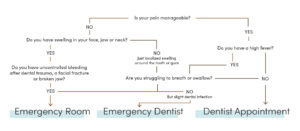
Whether you should go to the ER for tooth pain depends on the severity of your pain and what other symptoms you’re experiencing. Read on for help deciding how to find relief.