
How Long After Extraction Can I Get an Implant? Your Timeline Explained Clearly

Reviewed By Dr. Ehab Shahid, DMD, MAGD
November 2025 • 6 min Read
Reviewed By Dr. Ehab Shahid, DMD, MAGD
November 2025 • 6 min Read
The most common timeframe from extraction to implant is 8-12 weeks. Depending on a few factors, some patients need longer to heal, while others can have their implant placed on the same day as their extraction.
Immediate, Early, and Delayed Timelines Explained
| When It’s Done | When It’s Recommended | Key Benefits & Additional Considerations |
|---|---|---|
| Immediate Implant Placement: In some cases, the implant can be placed at the same appointment as the tooth extraction. | This is only possible if the tooth comes out cleanly with enough healthy bone left to hold the implant, and if there is no infection at the site. | This option saves time and can help preserve bone and gum shape. It’s commonly recommended for visible front teeth, as it tends to yield better cosmetic results. |
| Early Implant Placement: 2–3 months after extraction | This option is recommended if the gum and soft tissues need time to heal after the extraction, a minor infection needs time to clear up, and/or some bone modeling is needed to ensure the implant can be placed securely. | This is the timeline most often recommended by dentists, as it tends to lead to more predictably positive results. During the wait, some bone shrinkage can occur. If this happens, your dentist may need to perform a bone graft, adding natural or synthetic bone material to help rebuild and strengthen the jaw so it can support the implant. |
| Delayed Implant Placement: 3+ months after extraction | This longer timeline is recommended if a significant infection is present at the extraction site, major bone loss has occurred, and/or the patient needs extensive healing time. | While this is the safest and most predictable option, it does typically require bone grafting to ensure the implant has a solid foundation to attach to. |
| When It’s Recommended | Key Benefits & Additional Considerations |
|---|---|
| Immediate Implant Placement: In some cases, the implant can be placed at the same appointment as the tooth extraction. | |
| This is only possible if the tooth comes out cleanly with enough healthy bone left to hold the implant, and if there is no infection at the site. | This option saves time and can help preserve bone and gum shape. It’s commonly recommended for visible front teeth, as it tends to yield better cosmetic results. |
| Early Implant Placement: 2–3 months after extraction | |
| This option is recommended if the gum and soft tissues need time to heal after the extraction, a minor infection needs time to clear up, and/or some bone modeling is needed to ensure the implant can be placed securely. | This is the timeline most often recommended by dentists, as it tends to lead to more predictably positive results. During the wait, some bone shrinkage can occur. If this happens, your dentist may need to perform a bone graft, adding natural or synthetic bone material to help rebuild and strengthen the jaw so it can support the implant. |
| Delayed Implant Placement: 3+ months after extraction | |
| This longer timeline is recommended if a significant infection is present at the extraction site, major bone loss has occurred, and/or the patient needs extensive healing time. | While this is the safest and most predictable option, it does typically require bone grafting to ensure the implant has a solid foundation to attach to. |
Which Timeline Is Right for You?
Your dentist will determine their recommendation based on:
- Bone quality and quantity
- The presence or absence of infection
- Whether a bone graft is needed
- The location of the tooth
- Your overall health and healing ability
- How important timing and cosmetics are to you
In the Meantime
Living with a missing tooth while waiting for your implant can be stressful. Fortunately, there are temporary solutions available. Removable partial dentures are lightweight, affordable, and easy to remove. Temporary resin or acrylic bridges are more stable and natural-looking. Bonded or provisional restorations clip onto adjacent teeth.
Ask your dentist which options they’d recommend to help make the waiting period more manageable.
If you need help finding a dentist, click here or call (888) 597-3896.
Healing After Extraction vs. Waiting for Osseointegration
The process of getting an implant involves two distinct waiting periods.
The first occurs after the extraction, allowing healing time before an implant can be placed.
During this period:
- The gum tissue closes over the socket.
- Bone begins to form where the tooth used to be.
- Any infection clears, swelling reduces, and the site becomes stable.
At the end of this period (typically no more than three months) your dentist will evaluate whether the site is ready for an implant.
The second waiting period comes after the implant has been placed. Most single-tooth implants require a crown, but before that can be added, time is needed for the implant to fuse with the bone. This process is called osseointegration.
During this period:
- New bone cells grow around the implant.
- The implant becomes firmly anchored to the jawbone.
- The foundation becomes strong enough to support a crown.
This process typically takes 3-6 months. Afterward, your dentist will attach a crown (or other final restoration) to the implant, so that it can function like a natural tooth.
What to Do While Waiting for Your Implant
1. Follow Post-Extraction Care Instructions
- In the hours after your extraction, gently bite on gauze for 30–60 minutes at a time to help control bleeding.
- Do not rinse vigorously or spit for the first 24 hours.
- Avoid smoking, which slows healing and increases infection risk.
- Take any prescribed pain medications or antibiotics as directed.
2. Maintain Oral Hygiene
- Brush gently, avoiding the extraction site for a few days.
- Starting 24 hours after the extraction, rinse with warm salt water (½ teaspoon of salt in 8 ounces of warm water) 2–3 times daily.
- Avoid alcohol-based mouthwashes until the site is healed.
3. Eat Soft Foods
- Stick to soft, nutrient-dense foods like yogurt, mashed potatoes, soups, scrambled eggs, and smoothies.
- Avoid hard, crunchy, or sticky foods that can disturb the blood clot or irritate the socket.
4. Protect the Extraction Site
- Avoid using straws, which can dislodge the blood clot.
- Avoid touching the site with your tongue or fingers.
5. Monitor for Complications
Call your dentist if you experience any of the following:
- Excessive or prolonged bleeding
- Severe pain not relieved by medication
- Swelling or pus at the extraction site
- Fever
What to Do While Waiting for Osseointegration
1. Follow Post-Implant Care Instructions
- Take any prescribed antibiotics or pain medications as directed.
- Use ice packs to help with swelling in the first 24–48 hours.
- Avoid disturbing the implant site with your tongue or fingers.
2. Maintain Oral Hygiene
- Brush gently around the implant, avoiding direct pressure on the site for the first two weeks.
- Rinse with a prescribed mouthwash or warm salt water as instructed.
- Avoid flossing or using interdental brushes around the implant until your dentist gives the go-ahead.
3. Eat Soft Foods
- Stick to soft foods at first. Avoid sticky or hard foods that could loosen the implant or stress the surrounding bone.
- Gradually reintroduce harder foods as comfort allows but avoid chewing directly on the implant for a few weeks.
4. Avoid Risk Factors That Could Compromise Healing
- Do not smoke, as it significantly reduces blood flow and slows bone integration.
- Avoid alcohol, especially in the first week.
- Avoid activities that could cause trauma to the area.
5. Monitor for Complications
Call your dentist if you experience any of the following:
- Pain that worsens instead of improving
- Swelling or redness that persists beyond a few days
- Pus or bad odor
- The implant feeling unstable
Choosing Your Dentist
For help finding a dentist in your area with expertise in implants, click here or call (888) 597-3896.
During your initial consultation, consider asking these questions:
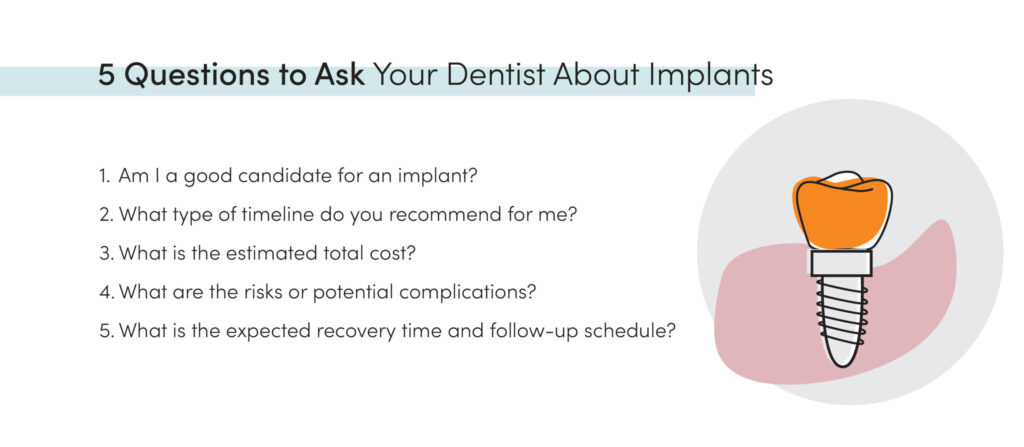
- Am I a good candidate for an implant?
- What type of timeline do you recommend for me?
- What is the estimated total cost?
- What are the risks or potential complications?
- What is the expected recovery time and follow-up schedule?
Don’t feel limited to these questions, of course. Feel free to take as much time as you need to feel clear and confident in your decisions.
About Dr. Ehab Shahid, DMD, MAGD
About Dr. Ehab Shahid, DMD, MAGD
Dr. Ehab Shahid is the lead clinician at Bergenfield Dental Associates, where he is dedicated to putting patients first. He believes every appointment should leave patients feeling heard, comfortable, and confident in their care, with a focus on maintaining healthy smiles for a lifetime.
Dr. Shahid is a Board-Certified Diplomate of the American Board of Oral Implantology and is committed to continuing education and clinical excellence. Actively engaged in the dental community, he strives to deliver high-quality care using the latest advancements in dentistry. He is a member of the American Dental Association (ADA), the American Board of Oral Implantology, the American Academy of Implant Dentistry, the New Jersey Dental Society, the Bergen County Dental Society, and the Bergen County Implantology Group.
Need Help Finding a Dentist?
Related Information
Broken Permanent Retainer: Is It a Dental Emergency?
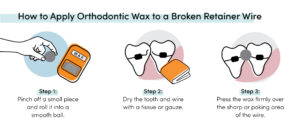
While a broken bonded retainer is rarely a medical emergency, you should make a dental appointment to prevent discomfort and tooth movement. Most dentists can usually solve the problem with a simple bonding fix.

Emergency Dentist Cost Without Insurance: Prices and Affordable Solutions
The first step in relieving acute tooth pain is an emergency dental exam. Without insurance, this typically costs $100-$300 dollars.
That appointment will allow for immediate pain management. If needed, you and the dental team can plan for additional treatment and discuss ways to break up the cost over time.
Rising Dental Emergencies Fuel Growth in After-Hours and Weekend Dentist Services
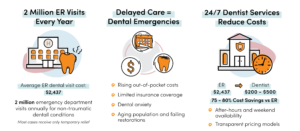
According to the American Dental Association, about 2 million people visit emergency departments each year for non-traumatic dental conditions. At first glance, a trip to the emergency room for a tooth problem might seem excessive, but many people simply don’t have other immediate options when severe dental pain hits.