loader image

Dentistry

How to Find a Good Dentist: 10 Things You'll Wish You Knew

Doctor Profile Image

Reviewed By Dr. Dennis Rollins, DDO | 


July 2025 • 6 min Read

Reviewed By Dr. Dennis Rollins, DDO | 
July 2025 • 6 min Read

Finding a good dentist means finding one who suits your particular needs and preferences. Read on for tips and guidance on making this important health decision. 

10 Things You’ll Wish You Knew About Choosing a Dentist

  1. “Bedside manner” matters as much as skill.
    A technically excellent dentist who fails to answer your questions and put you at ease will make every appointment stressful. Patience and clear communication are key qualities to look for.

  2. The front desk sets the tone.
    How the staff answers calls, handles scheduling and billing questions, and responds to emergencies will largely define your experience as a patient.

  3. You spend most of your appointments with hygienists.
    You’ll want to make sure these important staff members are thorough, personable, and gentle.

  4. Emergency access is not a given.
    Not every dentist handles after-hours issues the same way. You’ll want to know what the plan is if you find yourself in pain at 9pm.

  5. Costs and transparency differ.
    Some offer clear written cost estimates before treatment, while others keep it vague. You’ll want a dentist who lets you know exactly what you’ll owe.

  6. Insurance compatibility is nuanced.
    Some dentists are in-network, meaning they have a contract with your insurance, so you’ll usually pay less out of pocket. Some are out-of-network but will file claims for you, meaning they charge their own fees, your insurance may cover part, and you’ll pay the rest. And others are out-of-network and require you to pay upfront and submit your own paperwork to your insurer for reimbursement. It’s important to know which category a dentist falls into.

  7. High turnover is a red flag.
    If a dentist’s office frequently has new staff, it can signal problems in management or workplace culture. Staff longevity often means happier employees and better service and care.

  8. Technology impacts care quality.
    Features like digital X-rays, 3D imaging, and same-day crowns can save you time, decrease discomfort, and improve results.

  9. Treatment philosophy varies.
    Some dentists lean toward monitoring small issues, while others prefer immediate treatment. You’ll want to choose one whose philosophy matches yours.

  10. You’re in charge of this process.
    You can and should shop around for your dentist. This is an important choice, and you want to make it with as much clarity and confidence as possible.

Steps for Finding Your Dentist

If you’d like help finding a dentist near you, click here or call us at (888) 597-3896. 

Another good option is to ask friends, family, or other healthcare professionals for recommendations. Tell them about the communication style and treatment philosophy you prefer and see if any of their recommendations align with them.

Once you have a list of dentists to consider, you can narrow it down by checking practical details, such as location, hours of operation, and insurance acceptance.

For the remaining options, verify that they hold a valid DDS or DMD degree and an up-to-date state license. Professional memberships, like the American Dental Association, state or local dental societies, or specialty organizations, indicate ongoing education and adherence to professional standards.

From there, your next step is checking out online reviews. Watch for positive signs, like:

  • Praise of the dentist’s bedside manner.
  • Mentions of a friendly and organized office and staff.
  • Reports of positive outcomes and long-term relationships between the dentist and their patients.


You should also watch for red flags, such as:

  • Repeated complaints about rudeness, rushed appointments, or lack of cost transparency.
  • Frequent mentions of long wait times, high staff turnover, or poor handling of emergencies.


As you read reviews, take outliers with a grain of salt. One very negative review shouldn’t necessarily steer you away, nor should one glowing report convince you. Look for trends across multiple reviews.

After all this vetting, you’re ready to pick up the phone. A brief conversation with the front office staff can tell you a lot about a practice.

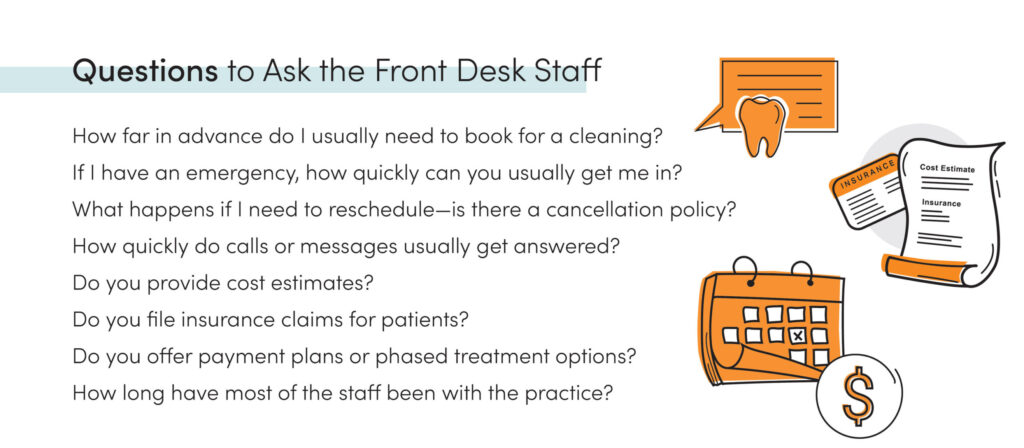
Questions to Ask the Front Desk Staff

Let the staff know that you’re considering becoming a new patient, and ask the following:

  • How far in advance do I usually need to book for a cleaning?
  • If I have an emergency, how quickly can you usually get me in?
  • What happens if I need to reschedule—is there a cancellation policy?
  • Do patients often see the same hygienist at each visit?
  • What’s the best way to get questions answered between visits — phone, email, portal?
  • How quickly do calls or messages usually get answered?
  • If I’m nervous about dental work, what can you do to make me more comfortable?
  • Do you provide cost estimates?
  • Do you file insurance claims for patients?
  • Do you offer payment plans or phased treatment options?
  • How long have most of the staff been with the practice?

Keep in mind that the tone in which these questions are answered is as important as the answers themselves. The way the staff handles calls like this will tell you a lot about the overall practice.

If, at this point, you feel good about a candidate, it’s time to talk to the actual dentist.

Questions to ask dental front desk staff about scheduling, emergencies, insurance, costs, and payment options

Interviewing a Dentist

Many practices offer free new patient consultations.

If there’s a cost for an initial consultation, or if you prefer a phone conversation, let the staff know you’d like a brief call with the dentist. If the dentist is unavailable right then, you can request a callback at a time that’s convenient for them. You can also ask if the dentist has alternate ways to communicate, such as email.

Whether in person, on the phone, or in writing, here are some key questions to ask.

  • What drew you into dentistry?
  • What do you enjoy most about dentistry?
  • How do you decide when to recommend treatment versus when to take a wait-and-see approach?
  • Can you walk me through how you explain treatment options?
  • How do you like your patients to ask questions—during the appointment? By phone or email?
  • What do your patients say they appreciate about you?
  • What do you think makes your practice different from others?
  • How do you help patients who are really anxious or have had bad experiences with dentists in the past?
  • What happens if a treatment plan is more expensive than I expected?
  • What do you find most rewarding about working with patients long-term?


Throughout this interview, remember that the right dentist will become a partner in your health and well-being. You want someone you can trust—someone who makes you feel at ease and is willing to listen and give you the information and confidence to make your own decisions. Don’t be shy about addressing your concerns; this is an important decision.

How to Break Up With Your Current Dentist

Parting ways with a dentist can feel awkward, but it’s perfectly normal. In fact, front office teams deal with these transitions all the time. Here are some practical steps for navigating that conversation.

Be Clear About Your Decision

No explanation is necessary. Politely and firmly state that you’ve decided to see another dentist moving forward.

Request Your Records

Ask for copies of X-rays, treatment notes, and any recent scans. This will help smooth the transition to your new dentist. 

Consider the Timing

If possible, avoid leaving in the middle of a treatment plan. Otherwise, discuss how ongoing care will be handled. Try to get your records before your first appointment with your new dentist.

Handle Outstanding Balances

Pay for any services you’ve already received. Ask for an itemized statement if needed.

Taking Charge of Your Dental Health

Finding the right dentist makes it easier to maintain your dental health, which contributes to your overall well-being. Take your time with this decision and remember that your comfort, confidence, and sense of control should always take priority.

Need Help Finding a Good Dentist?