Pericoronitis Home Remedies That Actually Help
These steps can reduce pain and inflammation but are not a permanent cure.
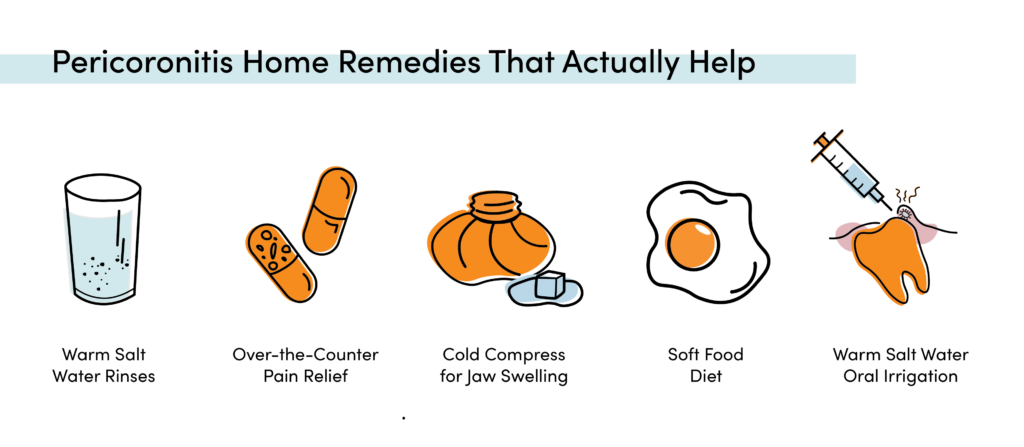
Warm Saltwater Rinses: Can help reduce bacteria and swelling.
- Mix half a teaspoon of salt in warm water
- Gently rinse 3 to 4 times daily
- Focus on letting the water sit near the area rather than vigorous swishing
Over-the-Counter Pain Relief
- Ibuprofen reduces inflammation and pain
- Acetaminophen helps with pain if ibuprofen is not suitable
- Avoid aspirin placed on the gums
Cold Compress for Jaw Swelling: This reduces inflammation and discomfort.
- Apply ice to the outside of the cheek for 10 to 15 minutes
- Use a barrier like a towel to protect your skin
Soft Food Diet
- Stick to yogurt, soups, eggs, smoothies, and mashed foods
- Avoid chips, seeds, rice, and crunchy foods that lodge under the flap
The Oral Irrigation Guide: How to Clean Under the Gum Flap Safely
This is one of the most effective at-home steps when done correctly.
What You Need
- A plastic irrigation syringe with a blunt, curved tip
- Warm salt water or diluted hydrogen peroxide (half water, half peroxide)
Step-by-Step
- Fill the syringe with the solution
- Gently pull the cheek aside
- Aim the tip along the gum line, not straight into the tissue
- Slowly flush under the flap to remove trapped debris
- Let the solution drain out naturally
Do this once or twice daily. Never force the tip under the gum or use sharp objects.
Mouthwash: What Helps and What Doesn’t
- Therapeutic rinses (chlorhexidine, peroxide-based) help reduce bacteria
- Cosmetic mouthwashes mainly mask odor and offer little infection control
If your dentist prescribes a medicated rinse, follow directions carefully.
Why Pericoronitis Keeps Coming Back
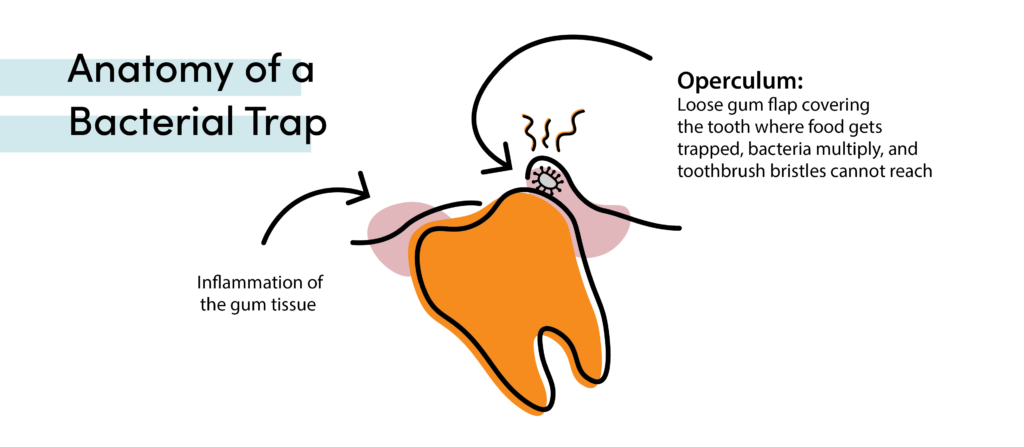
Even when symptoms calm down, the gum flap remains. As long as that flap exists, bacteria can collect again. Home remedies act like a pause button, not a cure.
Permanent solutions include:
- Professional irrigation and antibiotics
- Removing the gum flap
- Extracting the wisdom tooth
When to Call a Dentist Immediately
Untreated infections can spread beyond the jaw and become serious. Do not wait if you experience:
- Fever or chills
- Worsening swelling
- Trouble opening your mouth
- Pain spreading to the neck or throat
- Difficulty swallowing
What to Say When You Call a Dentist
Clear language helps you get help faster.
Say:
“I have pain and swelling around a partially erupted wisdom tooth with a gum flap. I’m worried about pericoronitis and infection.”
Your Next Step
Pericoronitis home remedies can bring temporary relief, but they rarely solve the underlying problem. If symptoms keep returning or worsen, professional care is the safest path.
Dentistry.com helps you find local dentists who can evaluate wisdom tooth infections and recommend the right treatment.
Find a dentist near you and get lasting relief, not just temporary comfort. Haga clic en aquí or call (888) 597-3896 para encontrar un dentista cerca de ti.
About Dr. Jody Bardash, DMD
About Dr. Jody Bardash, DMD
Dr. Jody Bardash is a lead clinician at Profesionales dentales de Fair Lawn, a family and cosmetic dentistry practice in Fair Lawn, New Jersey. With more than 30 years of experience, he is committed to delivering compassionate, high-quality care in dentistry and facial esthetics.
A graduate of Isaac Brauer College at Yeshiva University, Dr. Bardash stays at the forefront of innovation through advanced clinical training and continuing education. He is a member of the AACD, ADA, AGD, American Academy of Facial Esthetics, and the American Society for Dental Aesthetics. He also serves as a Clinical Instructor at Hackensack University Medical Center and Englewood Hospital and has been recognized by the Consumers’ Research Council of America for 25 years as one of the top dentists and facial injectors in the United States.