
imagen del cargador

Odontología

Sudden Sensitivity to Cold in One Tooth: Why It Happens

Doctor Profile Image

Revisado por Dr. Dennis Rollins, DDO |

Julio de 2025 - 6 min Leer

Reviewed By Dr. Dennis Rollins, DDO | Julio 2025 - 6 min Read

That sharp, electric jolt when cold water hits one specific tooth can stop you mid-sip. It feels sudden, alarming, and personal in a way general tooth sensitivity doesn’t.

If this just started happening, you’re probably wondering: Is this a cavity? A crack? Something serious? Or something that will go away?

This guide explains why sudden cold sensitivity in one tooth happens, how to tell whether it’s temporary or urgent, what you can do right now to reduce pain, and when it’s time to call a dentist before the problem escalates.

Sudden Pain Usually Means Something Changed

Long-term tooth sensitivity often comes from gradual enamel wear or gum recession. But sudden sensitivity in one tooth usually means something specific happened.

Common triggers include:

  • Biting down on something hard
  • A filling or crown shifting slightly
  • A small crack is forming that you can’t see
  • Decay reaching a sensitive area
  • Recent dental work that irritated the nerve
  • Sinus pressure affecting an upper tooth


In other words, your tooth didn’t become sensitive overnight by accident. Something changed structurally or biologically.

The Key Difference Most People Don’t Know: Lingering vs. Fading Pain

Dentists often separate cold sensitivity into two categories based on how long the pain lasts after the cold is gone. You can test this yourself.

The Lingering Test

  1. Take a sip of cold water
  2. Notice the pain
  3. Stop the cold stimulus
  4. Count how long the pain lasts


What the timing tells you

Pain fades within a few seconds
This often indicates reversible pulpitis, meaning the tooth’s nerve is irritated but not permanently damaged.

Common causes include:

  • Minor enamel damage
  • A shallow cavity
  • A loose or worn filling
  • Exposed dentin


These cases are uncomfortable but usually treatable with early care.

Pain lingers for 30 seconds or more
This can indicate irreversible pulpitis, where the nerve is inflamed or dying.

Common causes include:

  • Deep decay
  • A cracked tooth reaching the nerve
  • Infection inside the tooth


This type of pain rarely fixes itself and often worsens if ignored.

Why Only One Tooth Hurts (And Why That Matters)

General sensitivity usually affects many teeth at once. One-tooth pain is different.

When multiple teeth hurt

Cold sensitivity across several teeth is often linked to:

  • Cold weather exposure
  • Whitening products
  • Gum recession
  • Acid erosion
  • Aggressive brushing

These causes tend to be gradual and widespread.


When one tooth hurts

Sensitivity isolated to a single tooth often signals:

  • A cracked tooth (even a microscopic crack)
  • A cavity between teeth
  • A failing filling or crown
  • An early abscess
  • Trauma from grinding or clenching


This is why sudden pain in one tooth deserves closer attention. It’s more likely tied to a fixable issue that becomes expensive if delayed.

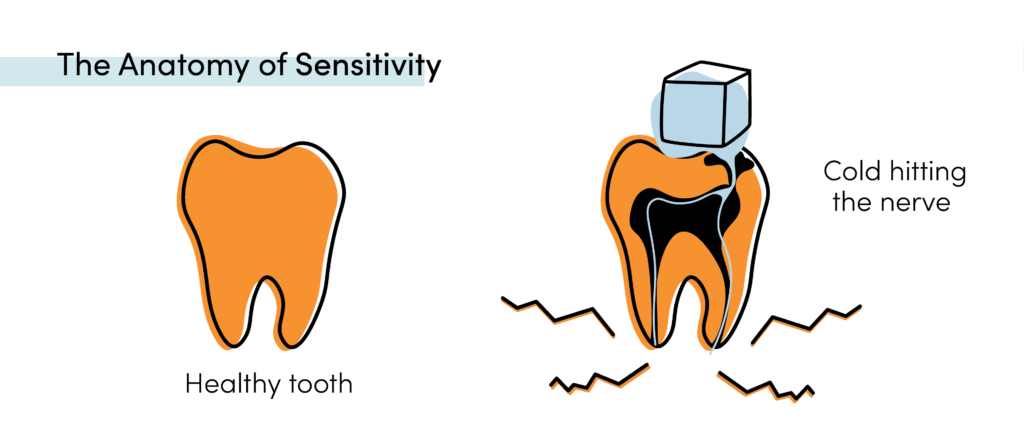
Tooth sensitivity diagram showing cold reaching the nerve and causing pain in a damaged tooth

Is This a Cavity, a Crack, or Something Temporary?

Here’s a practical way to think about it:

It may be temporary if:

  • The pain is brief
  • It only happens with extreme cold
  • It started after recent dental work
  • There’s no pain when biting or chewing


It’s more concerning if:

  • Pain lingers after cold exposure
  • The tooth hurts when biting down
  • Pain wakes you up at night
  • The sensitivity appeared suddenly without an obvious trigger
  • You notice swelling, pressure, or a bad taste


Cracks are especially tricky. Many aren’t visible on X-rays and can only be diagnosed through symptoms and clinical testing.

How to Reduce the Pain Right Now (At Home)

These steps won’t cure the underlying cause, but they can help control discomfort while you figure out next steps.

  • Avoid very cold foods and drinks
  • Use lukewarm water when brushing
  • Switch to a desensitizing toothpaste
  • Brush gently with a soft-bristled brush
  • Avoid chewing on that side
  • Skip acidic foods and drinks for now


If the pain improves but doesn’t disappear, that’s still a signal to monitor closely.

When to Call a Dentist Instead of Waiting

You should book an appointment soon if:

  • Pain lingers after cold exposure
  • The sensitivity worsens over days
  • You feel pressure or throbbing
  • Biting causes pain
  • Home care isn’t helping after a few days


You should seek care right away if:

  • Pain is severe or constant
  • There’s swelling in the gums or face
  • You notice a fever or foul taste
  • The tooth becomes sensitive to heat as well as cold


Ignoring sudden sensitivity can allow the nerve to die, turning a simple filling into the need for a root canal or tooth extraction.

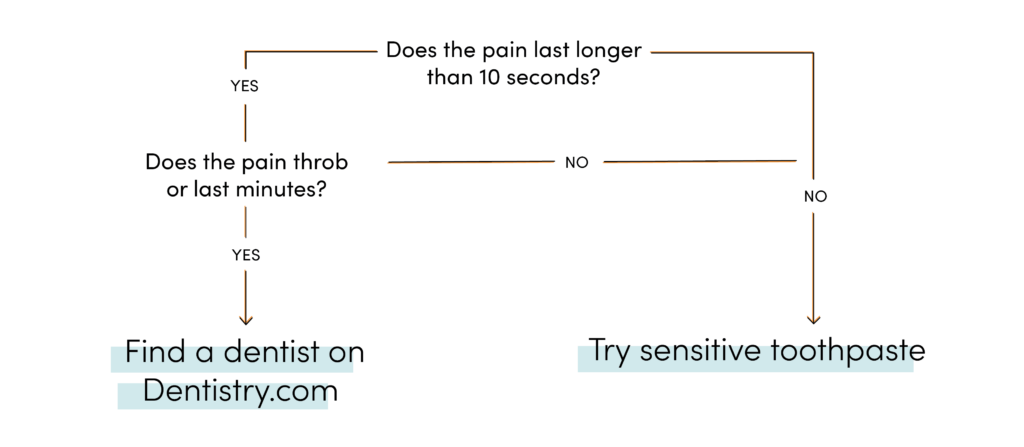
Flowchart guiding dental care: asks if pain lasts longer than 10 seconds, with branches to 'Find a dentist on Dentistry.com' or 'Try sensitive toothpaste' depending on yes/no.

Why Early Evaluation Matters More Than Relief

Sensitive toothpaste can dull symptoms, but it can also mask a growing problem.

If decay or a crack reaches the nerve, the tooth may temporarily stop hurting once the nerve dies. That doesn’t mean the problem is gone. It often means infection is spreading silently.

Early evaluation keeps options simpler, cheaper, and less invasive.

How Dentistry.com Helps If You’re Unsure What to Do

Sudden tooth pain creates decision paralysis. You’re not sure if it’s urgent, who to call, or whether you’re overreacting.

Dentistry.com helps by:

  • Connecting you with dentists who evaluate tooth pain quickly
  • Helping you find offices that explain costs clearly
  • Making it easier to get answers before pain escalates
  • Reducing the guesswork when you don’t know how serious it is yet

An evaluation doesn’t commit you to treatment. It gives you clarity.

Your Next Step

If cold drinks suddenly cause sharp pain in one tooth, your mouth is telling you that something specific has changed. Timing the pain, noticing whether it lingers, and paying attention to bite sensitivity can guide your next move.

Dentistry.com can connect you with a local dentist who can determine the cause of your sensitivity and help you address it before it becomes a bigger problem.

Haga clic en aquí o llámenos al (888)597-3896 para encontrar un dentista cerca de ti. 

Need Help Caring for Sudden Tooth Sensitivity?