Swollen Face From Tooth Infection: Emergency Signs
Reviewed By Dr. Jody Bardash, DMD |
November 2025 • 5 min Read
Reviewed By Dr. Jody Bardash, DMD |
November 2025 • 5 min Read
A swollen cheek from a tooth infection is not something to ignore. Facial swelling is a sign that the infection has spread beyond the tooth into the surrounding tissue. At that point, the risk is no longer just dental; it can become a medical emergency.
If you or a loved one has facial swelling from a tooth abscess, this guide will help you understand how serious it is, how to reduce pain right now, and whether you should go to the ER or call a dentist immediately.
Why a Tooth Infection Causes Facial Swelling
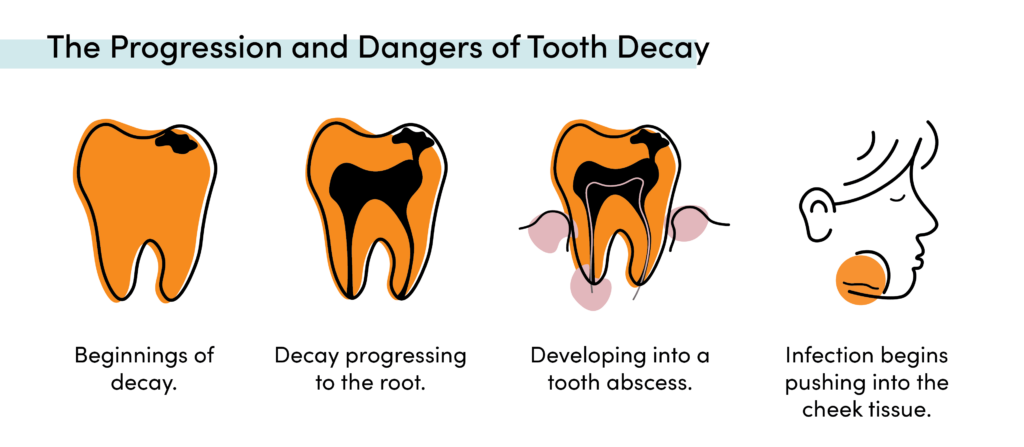
A tooth abscess starts when bacteria enter the inner pulp of the tooth, often through a cavity, crack, or failed filling. When the infection spreads past the root tip, pus and inflammation build in the jawbone and soft tissues of the face.
This pressure has nowhere to go, so it pushes outward, causing visible swelling in the cheek, jaw, or even under the eye. Once swelling appears, the infection is no longer contained.
Is a Swollen Cheek From a Tooth Infection Dangerous?
Yes, it can be. Facial swelling from a tooth infection means bacteria have escaped the tooth and may continue spreading. In severe cases, the infection can:
- Move toward the throat and affect breathing
- Spread into the bloodstream, causing sepsis
- Reach the eye socket or brain
This is why dentists and doctors treat facial swelling as a serious warning sign rather than a routine toothache.
Emergency Signs You Should Not Ignore
Seek urgent help right away if you notice:
- Rapidly increasing facial swelling
- Swelling near the eye or under the jaw
- Fever or chills
- Difficulty swallowing or breathing
- Severe, throbbing pain that does not improve
- A tight, shiny, or stretched feeling in the face
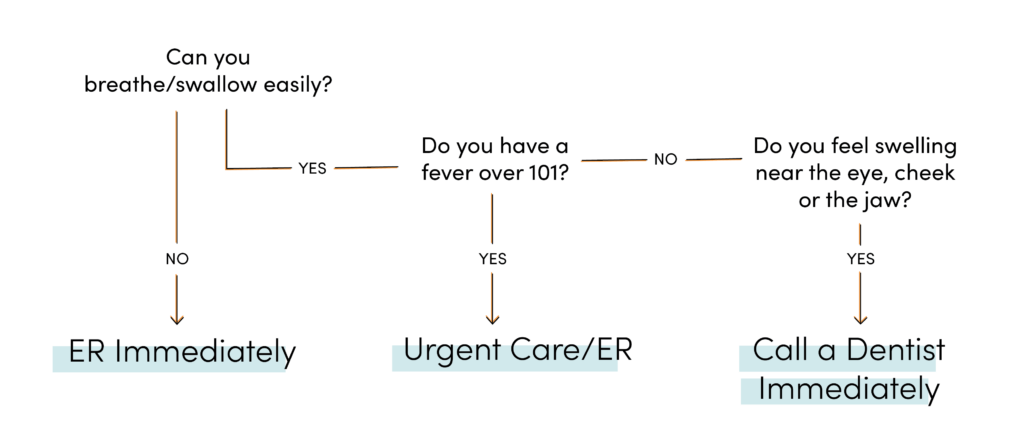
If breathing or swallowing feels compromised, go to the Emergency Room immediately.
Dentist or ER? How to Know Where to Go
This is where many people get stuck. The ER can stabilize you with IV antibiotics and pain control if your condition is dangerous. Dentists treat the source of the infection, which is the only way to stop it permanently.
Go to the ER if:
- You have trouble breathing or swallowing
- Swelling is spreading rapidly
- You have a high fever or feel faint
Call a dentist immediately if:
- You have facial swelling, but your airway is safe
- Swelling is localized to the cheek or jaw
- Pain is severe but manageable
Haga clic en aquí or call (888) 597-3896 para encontrar un dentista cerca de ti.
The “ER Trap” Reality Check
Many patients are not told that emergency rooms usually don’t extract teeth or perform root canals. Their role is to manage immediate risk, not to fix a tooth. That means you may leave the ER with antibiotics and pain medication, but the infected tooth remains.
Without dental treatment, the infection often returns, sometimes worse.
If the situation is not life-threatening, going straight to a dentist can save you time, money, and the need for repeat visits.
What You Can Do Right Now to Reduce Swelling and Pain
These tips can help temporarily while you seek care, but note that they do not cure the infection.
- Apply a cold compress to the outside of the face for 10–15 minutes at a time
- Keep your head elevated when lying down
- Rinse gently with warm salt water
- Take over-the-counter pain relievers as directed (avoid aspirin if swelling is significant)
- Do not apply heat or try to drain the area yourself
If swelling continues to worsen, seek emergency care.
Antibiotics Alone Are Not Enough
Antibiotics may slow the infection, but they cannot remove the infected tooth pulp or drain an abscess. Without a root canal or extraction, the infection often returns once antibiotics are stopped.
Dental treatment is required to fully resolve a swollen face from a tooth infection.
What to Say When Calling a Dentist (Use This Script)
When booking an emergency appointment, be specific. This helps offices triage you faster.
Say:
“I have facial swelling from a suspected tooth infection. The swelling extends to my cheek/jaw, and I am in significant pain.”
Avoid saying only “I have a toothache.” Facial swelling signals urgency.
Your Next Step: Act Quickly
A swollen cheek from a tooth infection is your body warning you that the problem has escalated. Waiting increases the risk of serious complications and more invasive treatment.
Dentistry.com helps you find local emergency dentists who can evaluate the swelling, treat the source of the infection, and explain your options clearly, often the same day.
Find a dentist near you and get the care you need before the infection spreads further. Haga clic en aquí or call (888) 597-3896 para encontrar un dentista cerca de ti.
About Dr. Jody Bardash, DMD
Dr. Jody Bardash is a lead clinician at Profesionales dentales de Fair Lawn, a family and cosmetic dentistry practice in Fair Lawn, New Jersey. With more than 30 years of experience, he is committed to delivering compassionate, high-quality care in dentistry and facial esthetics.
A graduate of Isaac Brauer College at Yeshiva University, Dr. Bardash stays at the forefront of innovation through advanced clinical training and continuing education. He is a member of the AACD, ADA, AGD, American Academy of Facial Esthetics, and the American Society for Dental Aesthetics. He also serves as a Clinical Instructor at Hackensack University Medical Center and Englewood Hospital and has been recognized by the Consumers’ Research Council of America for 25 years as one of the top dentists and facial injectors in the United States.

¿Necesita ayuda para encontrar un dentista?
Información relacionada

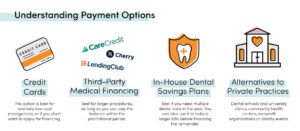
Dental Payment Plans: How to Finance Emergency Work
Dental emergencies rarely come with warning. One cracked tooth, abscess, or failed crown can turn into a four-figure bill overnight. When you are in pain, the stress of figuring out how to pay can feel just as overwhelming as the dental problem itself.

Broken Permanent Retainer: Is It a Dental Emergency?
While a broken bonded retainer is rarely a medical emergency, you should make a dental appointment to prevent discomfort and tooth movement. Most dentists can usually solve the problem with a simple bonding fix.

Emergency Dentist Cost Without Insurance: Prices and Affordable Solutions
The first step in relieving acute tooth pain is an emergency dental exam. Without insurance, this typically costs $100-$300 dollars.
That appointment will allow for immediate pain management. If needed, you and the dental team can plan for additional treatment and discuss ways to break up the cost over time.
Lorem ipsum dolor sit amet, consectetur adipiscing elit. Ut elit tellus, luctus nec ullamcorper mattis, pulvinar dapibus leo.