How Long Does Dental Sedation Last? Clear Answers and What to Expect
Reviewed By Dr. Jody Bardash, DMD
November 2025 • 6 min Read
Reviewed By Dr. Jody Bardash, DMD
November 2025 • 6 min Read
If you’re preparing for a dental procedure and are feeling unsure about how long sedation will affect you, you’re not alone. Whether you’re planning time off work, arranging a ride, or simply wondering when you’ll feel “normal” again, this guide provides clear, safety-focused timelines for each type of dental sedation, along with what to expect before, during, and after your appointment.
Why Knowing the Duration of Your Sedation Matters
Sedation helps you stay relaxed and comfortable during dental work, but recovery time varies widely. You may feel awake long before your reflexes and judgment fully return—this is the difference between “medical recovery” and “functional recovery.” Medical recovery is when the sedative has largely left your bloodstream, but functional recovery is when your judgment, coordination, and reflexes return to safe levels.
Many people worry about:
- How long they’ll feel groggy
- When they can drive
- When they can return to work or school
- Whether they’ll remember the appointment
- What they should prepare at home ahead of time
This guide breaks down everything you need to plan your recovery with confidence.
How Long Each Type of Dental Sedation Lasts
Below are the four most common types of dental sedation and estimates of what you can expect during recovery.
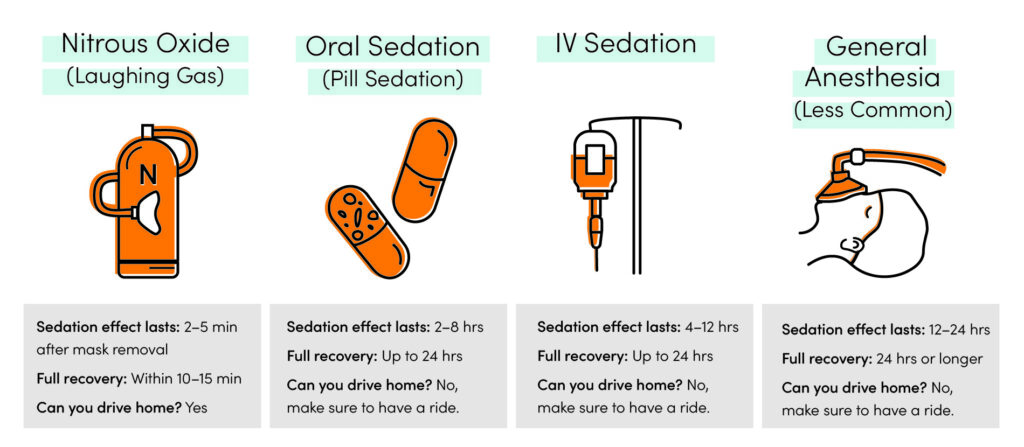
1. Nitrous Oxide (Laughing Gas)
Sedation effect lasts: 2–5 minutes after mask removal
Full recovery: Within 10–15 minutes
Can you drive home? Yes
Nitrous oxide is the only sedation option that wears off quickly enough for most patients to resume normal activities right away. Once the oxygen flush is complete, alertness returns rapidly.
What to expect:
You may feel light, warm, or tingly during the procedure. These sensations fade quickly once the gas stops flowing.
2. Oral Conscious Sedation (Pill Sedation)
Sedation effect lasts: 2–8 hours
Full recovery: Up to 24 hours
Can you drive home? No
Oral sedation uses a prescription pill to reduce anxiety and induce drowsiness. Many patients fall asleep lightly but can still respond to the dentist’s instructions.
What to expect:
You’ll feel unsteady and slow to react afterward. You will need a driver and should avoid work, school, or any activity requiring quick decisions for the rest of the day.
3. IV Sedation
Sedation effect lasts: 4–12 hours
Full recovery: Up to 24 hours
Can you drive home? No
IV sedation creates deeper relaxation and can cause temporary amnesia. Even if you feel clear-headed sooner than expected, your reaction time and judgment remain affected much longer.
What to expect:
You may not remember parts of the appointment. Plan a quiet rest of your day and have someone stay with you for several hours.
4. General Anesthesia (Less Common in Dentistry)
Sedation effect lasts: 12–24 hours
Full recovery: 24 hours or longer
Can you drive home? No
Used mostly for complex oral surgeries, general anesthesia fully renders you unconscious.
What to expect:
You will be monitored closely until you are fully awake, but grogginess and delayed reflexes persist well into the next day.
Not sure which type of sedation is right for you? A dentist can help you navigate the options.
For help finding a dentist in your area, click here or call us at (888) 597-3896.

The 24-Hour Rule: What You Should Not Do
Sedation can create an amnesic, intoxication-like effect, and patients often underestimate how impaired they are. Even if you feel fine, sedation can impair judgment in ways that aren’t obvious. For 24 hours after oral or IV sedation, avoid:
- Driving
- Operating machinery
- Returning to work that requires focus or coordination
- Making financial decisions
- Signing legal documents
- Online shopping or impulse purchases
- Drinking alcohol
Factors That Change Recovery Time
Every patient is different; your dentist will adjust dosing based on these factors. Your recovery may be shorter or longer depending on:
- Age
- Weight
- Liver function
- Metabolism
- Type and duration of the procedure
- Medications you take
- Anxiety levels or sedative tolerance
What a Normal Recovery Feels Like
Call your dentist if symptoms worsen after several hours or if you experience trouble breathing, persistent vomiting, or fever. Otherwise, recovery symptoms are normal and improve gradually. During the first few hours, you may notice:
- Grogginess
- Slowed reflexes
- Mild nausea
- Dry mouth
- Forgetfulness
- A sensation of being off balance
What to Prepare at Home: A Simple Recovery Setup
Make your recovery smoother by arranging a few items ahead of time to reduce stress when you return home drowsy or unsteady:
- Soft foods (yogurt, applesauce, soup, mashed potatoes)
- Plenty of water or electrolyte drinks
- Extra pillows for upright resting
- Comfortable blankets
- A place to sit or lie down without risk of falling
- Entertainment (audiobooks, movies, music)
Questions to Ask When You Call to Book an Appointment
When scheduling your procedure, ask the following questions to help you get the right care and ensure your recovery goes smoothly:
- What types of sedation do you offer (nitrous, oral, IV)?
- Do I need a driver?
- How long should someone stay with me afterward?
- How long before the appointment should I stop eating or drinking?
- Are there extra sedation fees?
- Is sedation covered by my insurance, or is it available with cash discounts?
- How long should I take off work or school?
Your Quick Sedation Checklist
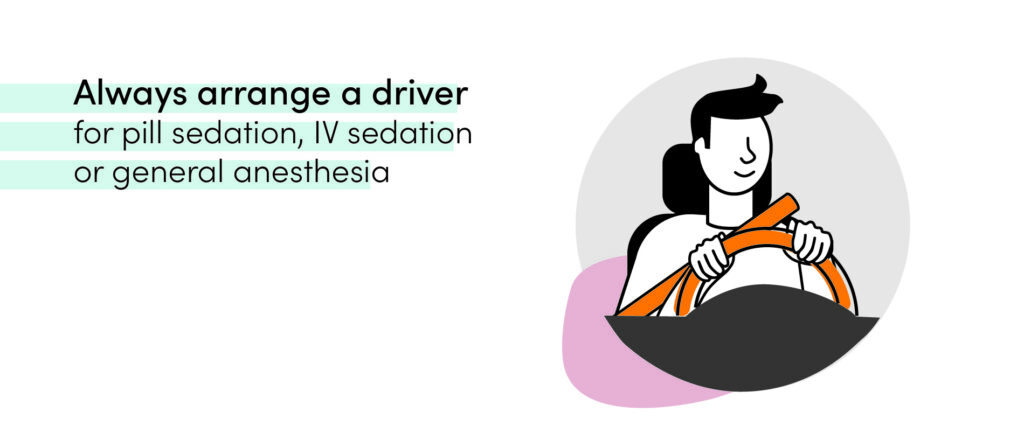
- Always arrange a driver for pill or IV sedation
- Prepare your home in advance
- Avoid driving and making important decisions for 24 hours
- Call a dentist if symptoms worsen
Need a Sedation Dentist Near You?
Related Information

Broken Tooth Repair Cost: From Bonding to Crowns
If you’ve chipped or cracked a tooth, you’re likely dealing with two problems at once: physical discomfort and financial panic. You’re not just wondering “How bad is this?”, you’re wondering “How much will this cost me?” This guide gives you clear, realistic price ranges, explains what affects the cost, and shows you how acting quickly can save you hundreds, or even thousands, of dollars.

How Much Is a Dentist Visit Without Insurance? Exact Costs Explained
Below, you’ll find a breakdown of typical out-of-pocket costs for common dental procedures, along with the reasons behind these costs. Keep in mind that these costs can vary significantly based on your location, the dentist’s experience, the materials used, and the complexity of the procedure.

Should You Go to the ER for Tooth Pain? A Quick Guide
Whether you should go to the ER for tooth pain depends on the severity of your pain and what other symptoms you’re experiencing. Read on for help deciding how to find relief.